





What's Happening?
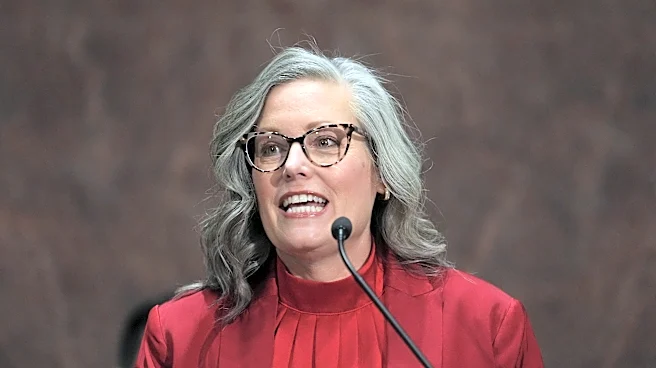
Democratic Arizona Governor Katie Hobbs has expressed concerns regarding the citizen initiative process in the state, following the failure of an anti-voucher measure to qualify for the November ballot. The measure, known as the Protect Education Act
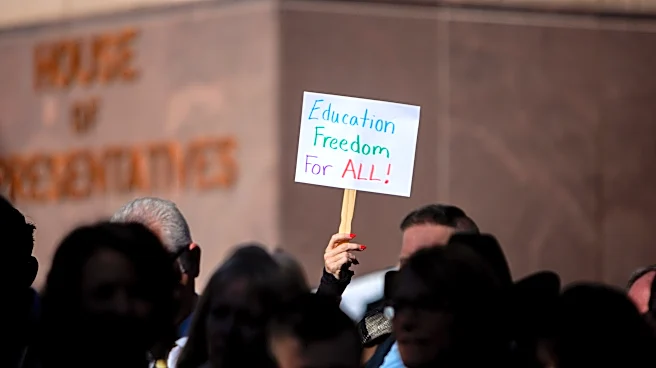
(later labeled Prop. 212), aimed to impose significant restrictions on Arizona's private school voucher program, Empowerment Scholarship Accounts. Despite proponents reportedly gathering 415,438 signatures, the initiative fell approximately 12,000 signatures short of the required 255,949 after legal challenges and signature reviews. Hobbs attributes this failure, in part, to state lawmakers who she claims have consistently made it more difficult for voters to get ballot measures through over the years. The Arizona Supreme Court upheld a trial court's method of calculating signatures, which included striking duplicate signatures and invalidating those collected by disqualified individuals due to criminal history or incomplete information.
Why It's Important?
The debate over Arizona's citizen initiative process highlights a broader tension between direct democracy and legislative control. The failure of the anti-voucher measure means that significant restrictions on the state's private school voucher program will not be put before voters this November, impacting public education advocacy groups and those who support or oppose the voucher system. Governor Hobbs's stance suggests a potential push for reforms to the initiative process, which could empower citizens to a greater extent in future legislative matters. Conversely, the current system, as defended by the courts, maintains a stricter standard for ballot qualification, which some argue prevents frivolous or poorly organized initiatives. The outcome also underscores the influence of legal challenges and the meticulous process of signature verification in determining the viability of citizen-led legislative efforts, affecting how future campaigns will need to strategize and execute their signature-gathering efforts.
What's Next?
In the wake of Prop. 212's failure, there is a call for potential reforms to the citizen initiative process. Senator Mitzi Epstein (D-Tempe) has advocated for allowing online signature collection, similar to the E-Qual system used for candidate nominating petitions, to address issues of validity and accessibility. While this idea has been proposed multiple times, it has yet to become state law. Future legislative sessions may see renewed efforts to introduce such changes, potentially leading to a more streamlined and less contentious signature-gathering process. However, given past legislative actions that have increased the difficulty for initiatives, any reforms aimed at easing the process could face opposition. The ongoing discussion will likely involve stakeholders from both sides of the political spectrum, influencing the future landscape of direct democracy in Arizona.
Beyond the Headlines
The controversy surrounding the citizen initiative process in Arizona extends beyond the immediate issue of school vouchers, touching upon fundamental questions of democratic participation and legislative power. Governor Hobbs's critique of lawmakers 'chipping away' at the process points to a long-term trend of legislative actions that have incrementally raised the bar for citizen initiatives, including stricter compliance standards, increased vote percentages for tax-related measures, and single-subject requirements. This ongoing legislative tightening could be seen as an attempt to curb the influence of direct democracy, potentially shifting more power back to elected representatives. The selective intervention by Hobbs in local initiatives, such as supporting the Axon project while vetoing legislation related to a data center in Marana, further complicates the narrative, suggesting a nuanced approach to when and how the state government should override local voter sentiment or facilitate economic development. This highlights the complex interplay between state economic interests, local autonomy, and the mechanisms of direct democracy.