





What's Happening?
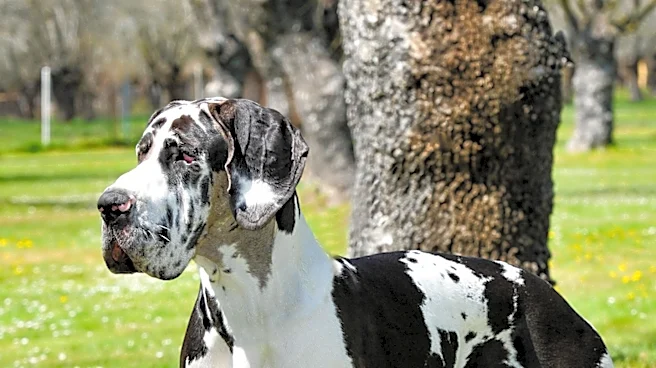
As of November 13, 2026, 32 Great Danes are available for adoption across 21 counties in North Carolina, according to the NC Pet Project. Lincoln County has the highest number with six, followed by Catawba and Wake Counties, each with three. Approximately
69% of these dogs are listed by rescue organizations, while 31% are with public and nonprofit shelters. A significant portion, about 66%, are housed in foster homes, necessitating appointments for visits. The typical age for these adoptable Great Danes, based on 21 dogs with listed ages, is around two years. The NC Pet Project compiles these listings from 372 North Carolina shelters and rescues, with daily updates to reflect new additions and adoptions. Breed labels are based on staff estimations rather than DNA tests, meaning a dog's actual breed mix might differ from its listing.
Why It's Important?
The prevalence of Great Danes in North Carolina shelters highlights ongoing challenges in animal welfare, particularly for large breeds that often require specific care and living conditions. The high percentage of dogs in foster homes underscores the critical role of volunteer networks and rescue organizations in managing the pet population and providing temporary housing. This situation also points to the need for public awareness regarding responsible pet ownership, including the commitment required for large breeds like Great Danes, which are described as loyal, gentle giants needing daily exercise and obedience training. Their sensitivity to cold weather due to short coats also implies specific care requirements that potential adopters must consider. The continuous influx of adoptable animals emphasizes the strain on shelter resources and the importance of adoption over purchasing to alleviate overcrowding.
What's Next?
Prospective adopters are encouraged to regularly check the NC Pet Project website, as shelter listings are updated daily. Given that many Great Danes are in foster care, individuals interested in adoption should be prepared to schedule appointments for visits. The NC Pet Project also advises potential adopters to review guides on adopting versus buying a dog and the appropriate timing for spaying or neutering. Continued efforts from rescue organizations and shelters will be crucial in finding permanent homes for these animals. Public education campaigns on breed-specific needs and the benefits of adoption could further support these initiatives, potentially reducing the number of large breeds entering shelters in the future.
Beyond the Headlines
The situation with Great Danes in North Carolina reflects a broader societal issue concerning pet abandonment and the challenges faced by animal welfare organizations. The reliance on foster homes indicates a community-driven approach to animal care, but also points to the limitations of traditional shelter facilities. The emphasis on breed labels being staff guesses rather than DNA tests highlights the complexities in accurately identifying mixed-breed dogs, which can impact adoption rates and breed-specific rescue efforts. This scenario also brings to light the ethical considerations of pet breeding practices, particularly if these animals originate from situations that contribute to overpopulation or neglect. The long-term solution involves a multi-faceted approach combining responsible breeding, widespread spay/neuter programs, and robust adoption support systems.