


What's Happening?
Deadly flooding has prompted evacuations across the Southwest United States, with a significant storm system now moving eastward. In Flagstaff, Arizona, a 73-year-old man, identified as Williams Singavarapu, was found dead after reportedly falling into
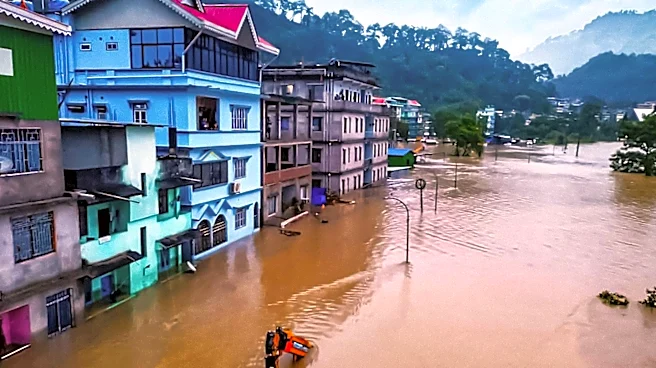
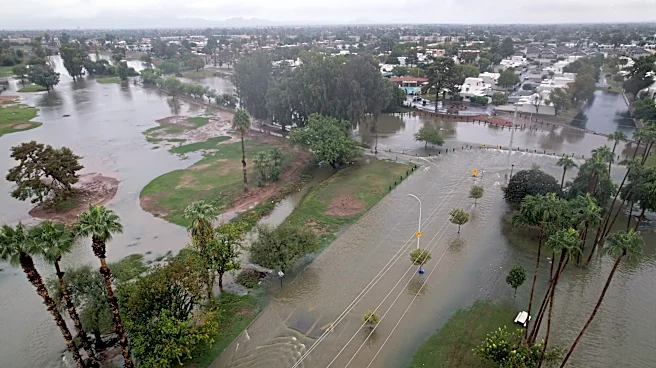
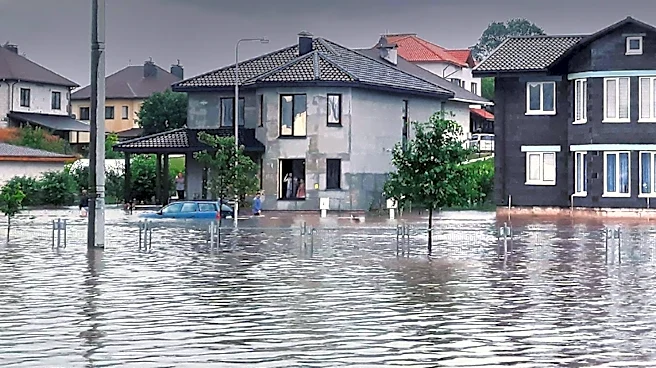
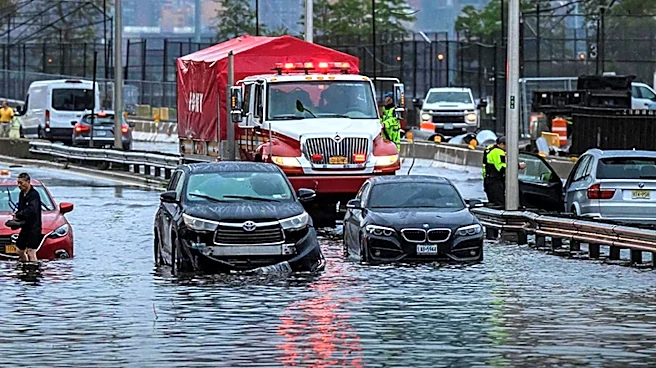
floodwater on Sunday evening. Crews in Sedona, Arizona, have conducted rooftop rescues due to dangerous flood conditions. Over ten rivers, creeks, and washes in Arizona and southwest Colorado have surpassed major flood stages, with some setting new record crests. The flooding of these swollen waterways is expected to persist through at least Tuesday. Flash floods on Sunday also triggered evacuations in northern New Mexico and central Arizona, and a Colorado ski town is preparing for its main river to reach catastrophic levels. This follows days of flooding in southwestern states from another wet storm last week.
Why It's Important?
The severe and deadly flooding in the Southwest highlights the immediate dangers posed by extreme weather events, leading to loss of life, property damage, and the need for emergency evacuations. The widespread nature of the flooding, affecting multiple states and causing rivers to exceed record levels, underscores the vulnerability of infrastructure and communities in the region. The ongoing flood risk, even as rain clears in some areas, means that residents and emergency services must remain vigilant. The economic impact includes costs associated with rescue operations, property repairs, and potential disruptions to local businesses and transportation. The event also draws attention to the broader implications of climate patterns, such as El Niño, which experts suggest are intensifying these storms, making them more frequent and severe.
What's Next?
The storm system is projected to shift eastward, indicating that other regions may soon face similar flood risks. Flood warnings remain in effect for various areas, including Coconino, Navajo, and Apache counties in Arizona, with roads closed and impassable due to flooding. Water levels are expected to recede through the evening, but the threat of flooding persists. Experts recommend that residents in affected and potentially affected areas monitor forecasts, plan for contingencies, and adhere to evacuation warnings issued by local authorities. The current extreme El Niño event, which is contributing to the increased moisture and storm intensity, is anticipated to peak in December and could continue to influence weather patterns for several months, suggesting a prolonged period of heightened flood risk in the Southern U.S.
Beyond the Headlines
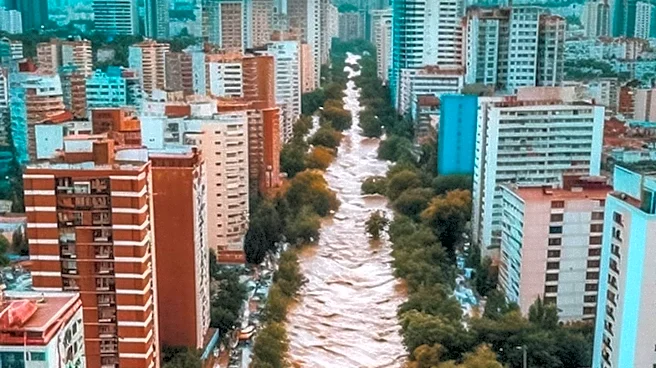
The current flooding event in the Southwest is being exacerbated by an extreme El Niño phenomenon, which scientists describe as a "super duper El Niño." This natural warming cycle in the Pacific Ocean is adding significant moisture to the air and altering atmospheric winds, creating more favorable conditions for intense storms. While El Niño events occur irregularly, the current iteration is particularly severe, with over 20 trillion gallons of water having fallen on the Four Corners states and Nevada in the past two weeks. This intensity is further amplified by human-caused climate change, which has already warmed ocean temperatures, making El Niño situations more extreme. The global impact of this phenomenon is evident, with regions like Peru and Ecuador also experiencing record-breaking flooding, signaling a broader shift in global weather patterns and the increasing frequency of severe weather events.