


What's Happening?
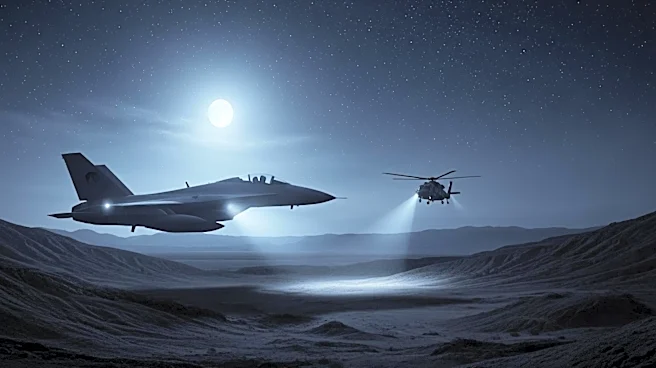
US special forces are engaged in a high-stakes search operation for the navigator of an F-15E fighter jet that crashed in Iran. The mission, described as extremely dangerous, involves elite units using helicopters and potentially parachuting into enemy
territory to locate the missing crew member. The search is complicated by the rugged terrain of the Zagros Mountains, where the crash occurred. Iran is also conducting its own search, offering a cash reward for the navigator's capture. The situation is tense, with US forces operating under the threat of Iranian military action, as evidenced by previous incidents where US helicopters were fired upon during rescue operations.
Why It's Important?
The search operation highlights the ongoing military tensions between the US and Iran, with potential implications for international diplomacy and security. The successful rescue of the navigator could prevent further escalation, while his capture by Iran could be used as leverage in negotiations, potentially affecting US foreign policy and military strategy. The incident also raises questions about US air superiority claims, as the downing of the F-15E contradicts recent statements by US officials. The outcome of this mission could influence public perception and political pressure on the US administration, particularly regarding its handling of military operations in the region.
What's Next?
If the navigator is found by US forces, it could de-escalate the situation and allow for continued diplomatic efforts. However, if Iran captures him, it could lead to increased tensions and potentially force the US to reconsider its military strategy in the region. The US administration may face domestic and international pressure to respond, which could include military action or intensified diplomatic negotiations. The situation remains fluid, with both countries closely monitoring developments and preparing for various outcomes.
Beyond the Headlines
The incident underscores the complexities of modern combat search and rescue missions, which have evolved significantly since their inception. The operation in Iran draws parallels to historical missions, such as those during the Vietnam War, highlighting the enduring challenges of rescuing personnel in hostile environments. The mission also reflects broader geopolitical dynamics, as local tribal groups in Iran, familiar with the terrain, pose additional challenges to US forces. The outcome of this mission could influence future military tactics and the development of international rescue protocols.