




What's Happening?
Landry Kalembo, a global health doctoral candidate at McMaster University, is conducting research focused on understanding how forced displacement impacts health outcomes. His work emphasizes the need for health interventions to be specifically tailored
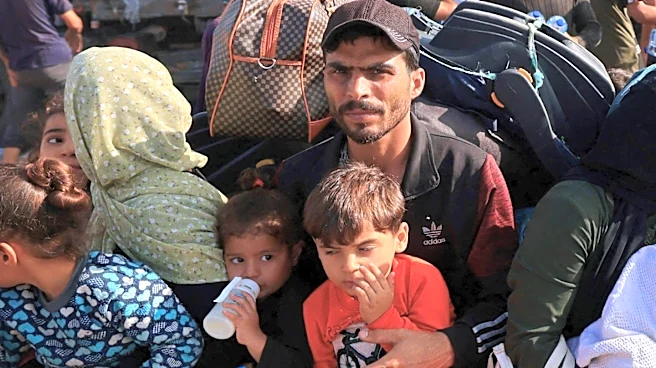
to the diverse experiences of displaced individuals, rather than treating all forcibly displaced people as a single group. Kalembo's research is informed by his personal experience of displacement from the Democratic Republic of Congo to Uganda and then to Canada. He highlights that refugees and asylum-seekers crossing international borders, internally displaced people remaining within their own countries, and those repeatedly displaced face different challenges that profoundly shape their health trajectories and access to care. His studies also examine the diagnosis and management of infectious diseases in these contexts, considering factors like financial hardship, food insecurity, unstable housing, and strained health systems. Kalembo describes displacement as a 'structurally produced clinical context of inequality,' aiming to identify effective strategies and improve preparedness for public health disruptions.
Why It's Important?
This research is crucial for improving global health policy and humanitarian aid strategies, particularly for the U.S. and other nations involved in supporting displaced populations. By advocating for tailored health interventions, Kalembo's work challenges the current generalized approaches, which often fail to address the specific needs of diverse displaced groups. A more nuanced understanding of health challenges among refugees, asylum-seekers, and internally displaced persons can lead to more effective allocation of resources and development of targeted programs. This is vital for U.S. organizations and government agencies that provide aid and resettlement services, as it can enhance the efficacy of their efforts, reduce health disparities, and improve long-term outcomes for displaced individuals. Recognizing the 'structurally produced clinical context of inequality' also prompts a deeper examination of systemic issues contributing to poor health among these vulnerable populations, potentially influencing U.S. foreign policy and humanitarian funding priorities.
What's Next?
As Landry Kalembo completes his PhD, he plans to pursue a career as a professor, researcher, and educator, collaborating with global health organizations. His future work will focus on generating evidence to advance health equity and ensure that the voices and experiences of marginalized communities inform decision-making processes. This will likely involve continued research into the specific health needs of various displaced groups and advocating for policy changes based on his findings. The insights from his research could lead to the development of new guidelines for humanitarian aid, potentially influencing how international bodies and national governments, including the U.S., design and implement health programs for displaced populations. There may also be increased emphasis on preventative medicine and addressing the root causes of health disparities in displacement contexts.
Beyond the Headlines
Kalembo's research delves into the ethical and societal implications of how displaced individuals are perceived and treated within health systems. By questioning why people must be 'extraordinarily resilient' and focusing on 'what works' rather than solely on negatives, he highlights a shift towards appreciative inquiry in humanitarian efforts. This approach not only seeks to understand existing challenges but also to identify and strengthen successful community-based solutions. The long-term impact could be a more dignified and empowering approach to humanitarian aid, moving beyond mere crisis management to fostering sustainable health and well-being. His personal journey underscores the importance of diverse perspectives in research, challenging stereotypes and demonstrating how lived experiences can profoundly shape academic pursuits and contribute to more equitable global health outcomes.