
What's Happening?
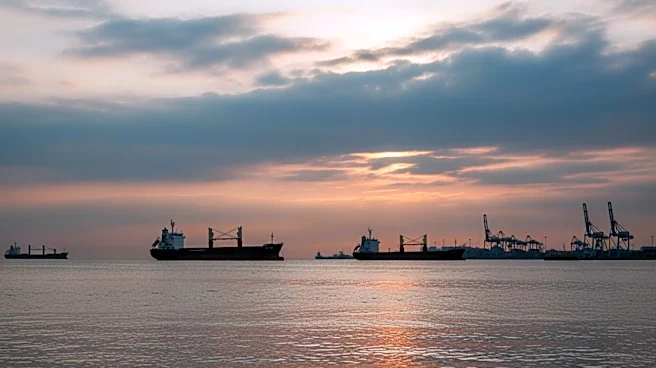
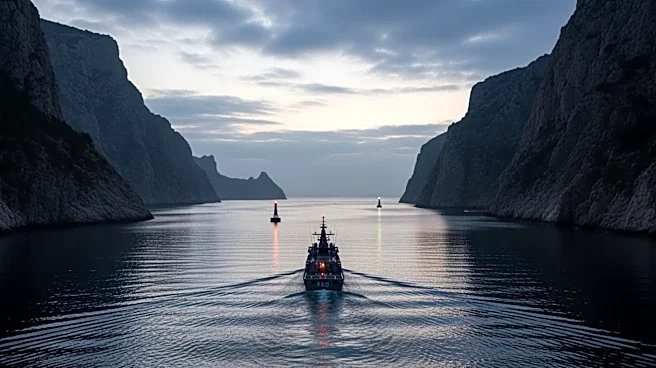
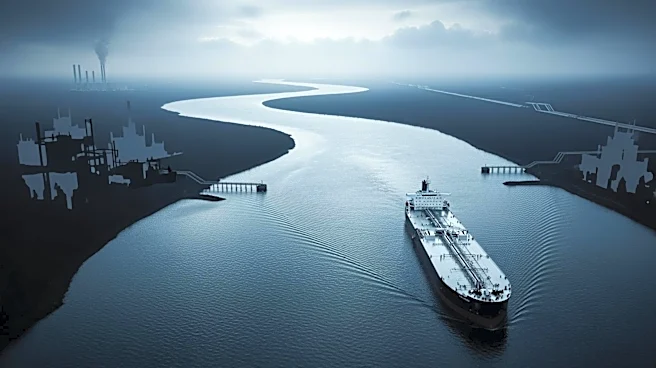
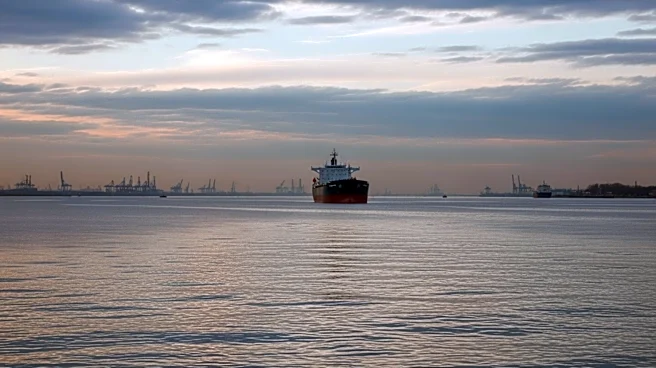
Shipping traffic through the Strait of Hormuz remains significantly reduced as negotiations between the United States and Iran have stalled. Recent data shows that only seven ships, primarily dry bulk
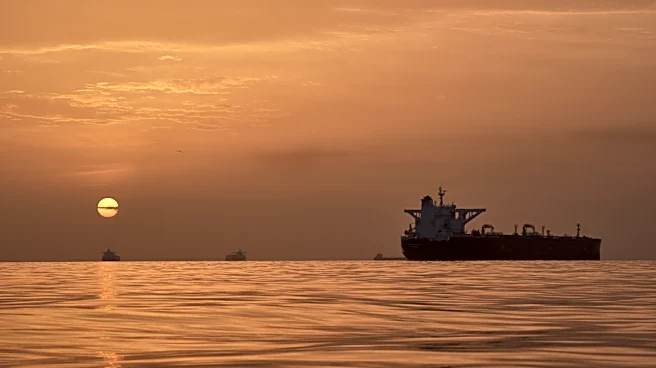
vessels, have crossed the strait in the past 24 hours. This is a stark contrast to the pre-conflict average of 140 daily passages. The U.S. Central Command has redirected 37 vessels since a blockade was imposed on Iran on April 13. Meanwhile, six Iranian tankers have returned to Iranian ports, carrying approximately 10.5 million barrels of oil. Despite the blockade, around four million barrels of Iranian oil managed to pass through on April 24. The current situation follows an uneasy ceasefire between Washington and Tehran, with no immediate resolution in sight.
Why It's Important?
The reduced shipping activity in the Strait of Hormuz, a critical chokepoint for global oil transportation, underscores the ongoing geopolitical tensions between the U.S. and Iran. This situation has significant implications for global oil markets, potentially affecting oil prices and supply chains. The blockade and reduced traffic could lead to increased shipping costs and delays, impacting industries reliant on oil and goods transported through this route. The stalled negotiations highlight the challenges in reaching a diplomatic resolution, which could prolong economic and political instability in the region. Stakeholders in the energy sector, particularly those in the U.S. and Middle East, are closely monitoring the situation as it could influence future policy and economic decisions.
What's Next?
The continuation of the blockade and muted shipping traffic suggests that tensions between the U.S. and Iran may persist. Future developments will likely depend on diplomatic efforts to resume talks and reach an agreement. The international community, including major oil-importing countries, may increase pressure on both nations to find a resolution to avoid further disruptions. Additionally, the U.S. military's strategic decisions in the region will be crucial in maintaining security and stability. Observers will be watching for any changes in military presence or policy shifts that could impact the current status quo.