







What's Happening?
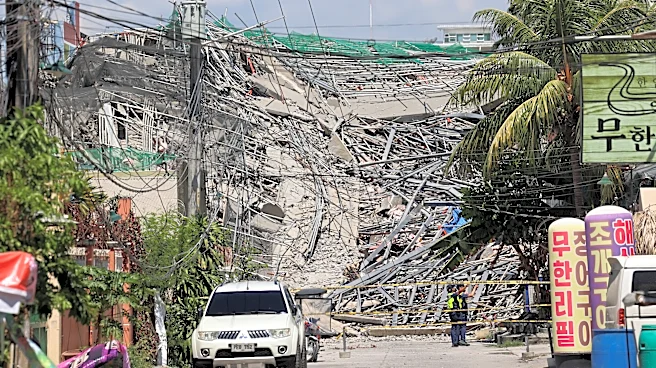
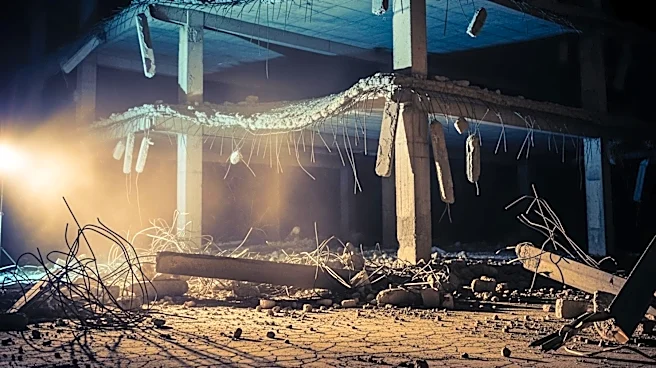
A nine-story building under construction in Angeles City, north of Manila, Philippines, collapsed following a severe thunderstorm. The incident has left at least 21 people missing, with rescuers hearing voices from the rubble. The collapse occurred before
dawn, and 24 workers managed to escape or were rescued. The building's collapse has prompted a large-scale rescue operation involving over 100 police and government personnel. While no deaths have been reported, some individuals who escaped sustained injuries. Among the missing, most are believed to be construction workers. Additionally, two people, including a Malaysian tourist, were injured by debris. Rescuers, including firefighters and disaster-response teams, are using their hands and sniffer dogs to search for survivors amidst the unstable debris.
Why It's Important?
The collapse of the building highlights significant safety and regulatory concerns in construction practices, particularly in regions prone to severe weather conditions. The incident underscores the need for stringent building codes and effective enforcement to prevent such tragedies. The rescue operation's scale reflects the urgency and complexity of responding to construction-related disasters. This event may prompt a reevaluation of construction safety standards in the Philippines, potentially influencing policy changes to enhance worker safety and building integrity. The economic impact on the local community, which relies on construction and related industries, could be significant, affecting livelihoods and future development projects.
What's Next?
Rescue efforts are ongoing, with authorities prioritizing the safe extraction of any remaining survivors. The incident is likely to lead to investigations into the building's construction practices and adherence to safety regulations. The outcome of these investigations could result in legal actions against responsible parties and reforms in construction oversight. Additionally, there may be increased scrutiny on other construction projects in the region to prevent similar incidents. The local government and disaster response teams will continue to monitor the situation, providing updates and support to affected families.
Beyond the Headlines
The collapse may have broader implications for the construction industry in the Philippines, highlighting the need for improved disaster preparedness and response strategies. It also raises questions about the resilience of infrastructure in the face of climate-related events, such as severe thunderstorms. The incident could serve as a catalyst for international cooperation in sharing best practices for construction safety and disaster management. Furthermore, it may influence public perception and trust in construction projects, affecting future investments and development plans in the region.