



What's Happening?
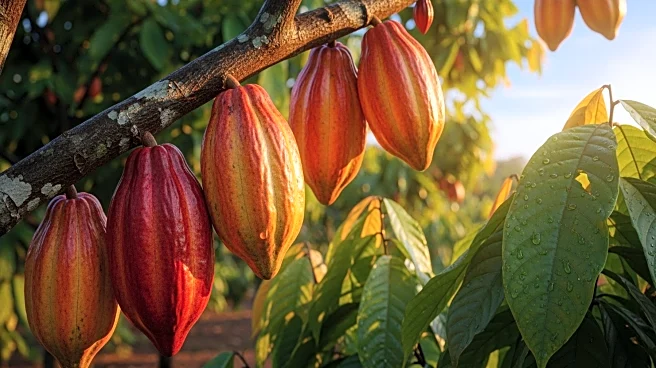
Ecuador is experiencing a significant increase in cocoa production, with output expected to reach 800,000 tons by 2030, more than double the levels of 2023. This growth is attributed to climate change, which has affected traditional cocoa-growing regions
like West Africa. Extreme weather events have disrupted cocoa production in these areas, leading to a shift in global cocoa supply dynamics. Ecuador, with its favorable climate and innovative agricultural practices, is stepping in to fill the gap left by declining production in West Africa. The country is poised to become the world's second-largest cocoa producer, surpassing Ghana. Ecuadorian farmers are adopting sustainable farming methods and investing in resilient cocoa strains to mitigate the impacts of climate change.
Why It's Important?
The shift in cocoa production to Ecuador underscores the broader impact of climate change on global agriculture. As traditional cocoa-growing regions face challenges, countries like Ecuador are emerging as key players in the industry. This transition highlights the need for adaptive agricultural practices and investment in climate-resilient crops. The changes in cocoa production also have economic implications, as Ecuador positions itself as a major supplier in the global market. The increased production capacity in Ecuador could stabilize cocoa prices, which have been volatile due to supply disruptions. Additionally, the focus on sustainable farming practices in Ecuador could serve as a model for other agricultural sectors facing climate-related challenges.
What's Next?
Ecuador's rise in the cocoa industry may lead to increased investment in agricultural infrastructure and research to further enhance production capabilities. The country may also explore new markets and expand its export reach. As climate change continues to affect global agriculture, other countries may follow Ecuador's lead in adopting sustainable practices and diversifying crop production. The international cocoa market will likely monitor these developments closely, as shifts in production could influence global supply chains and pricing. Policymakers and industry stakeholders may also focus on supporting climate adaptation strategies to ensure the long-term viability of cocoa and other crops.