





What's Happening?
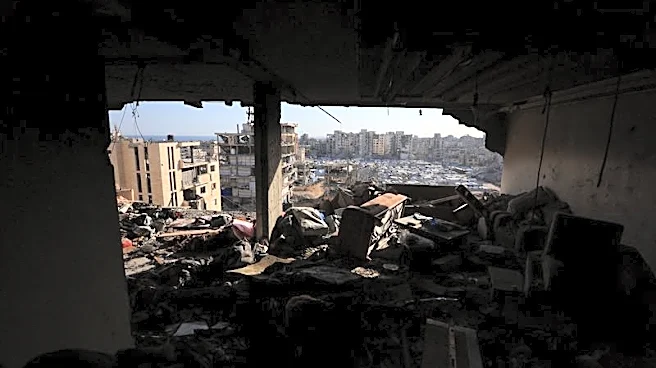
The United States is contemplating the use of Iranian assets to aid Gulf states in rebuilding and repairing damage from recent Iranian attacks. This development follows a series of strikes by Iran on Kuwait and Bahrain, both of which host U.S. military
bases. According to a source familiar with the situation, U.S. Treasury Secretary Scott Bessent has directed his department to gather comprehensive damage estimates from Gulf allies. The U.S. Treasury Department plans to utilize 'all available authorities' to facilitate the use of Iranian assets for reconstruction purposes. However, it remains unclear whether the assets in question are limited to frozen funds or include physical assets like oil tankers. The ongoing negotiations between the U.S. and Iran are complicated by Tehran's demand for the immediate release of billions of dollars in frozen assets, which Iran views as a prerequisite for any agreement.
Why It's Important?
This potential move by the U.S. to use Iranian assets for reconstruction in the Gulf could significantly impact diplomatic relations and economic policies. For the Gulf states, receiving funds for reconstruction could alleviate the financial burden of repairing infrastructure damaged by Iranian attacks. However, this action could further strain U.S.-Iran relations, as Iran demands the release of its frozen assets as a condition for any diplomatic agreement. The situation also places pressure on President Trump domestically, as rising gas prices and criticism of the ongoing conflict add to the challenges faced by his administration. The decision to use Iranian assets could be seen as a strategic move to support U.S. allies in the region while maintaining pressure on Iran.
What's Next?
The next steps involve continued negotiations between the U.S. and Iran, with both sides likely to demand changes to any emerging agreements. The U.S. may face diplomatic challenges in balancing the interests of its Gulf allies with the demands of Iran. Additionally, the U.S. military's recent actions, including strikes on Iranian radar sites, suggest that military tensions may persist despite ongoing diplomatic efforts. The outcome of these negotiations could have significant implications for regional stability and U.S. foreign policy in the Middle East.