



What's Happening?
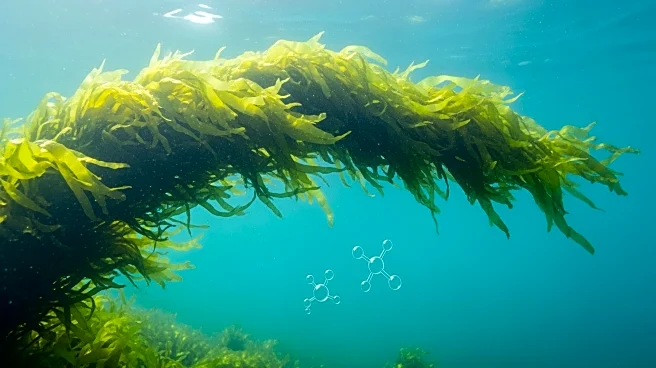
A study by researchers from Griffith University and Marinova suggests that compounds found in seaweed, such as fucoidan and ulvan, can inhibit norovirus from binding to human cells. Norovirus, a leading cause of acute gastroenteritis, spreads rapidly
in closed settings and has been difficult to target with vaccines due to its ability to mutate. The seaweed compounds act as decoys, mimicking sugars on cell surfaces to prevent the virus from attaching. This approach could offer a new way to prevent norovirus infections, though further research is needed to confirm its effectiveness in humans.
Why It's Important?
The findings are significant as they offer a potential alternative to vaccines for preventing norovirus infections, which are a major public health concern. By targeting the virus's physical mechanism of infection, this approach could be effective even as the virus evolves. If developed into preventive supplements or treatments, seaweed-derived compounds could reduce the risk of infection in high-risk settings, such as schools and hospitals, providing a new tool in the fight against norovirus.
What's Next?
Further research is needed to test the effectiveness of seaweed compounds in humans and explore their potential as preventive supplements or treatments. Public health experts emphasize that basic precautions, such as handwashing, remain essential. If successful, this approach could lead to new interventions that reduce norovirus infections, particularly in high-risk environments.