






What's Happening?
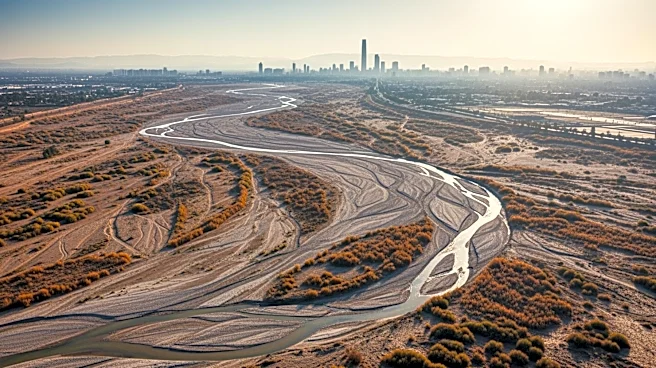
Cities like Phoenix and Las Vegas, which rely heavily on the Colorado River, are facing severe water shortages. Despite significant reductions in water consumption, recent research indicates that these efforts may not be sufficient to prevent shortages. The
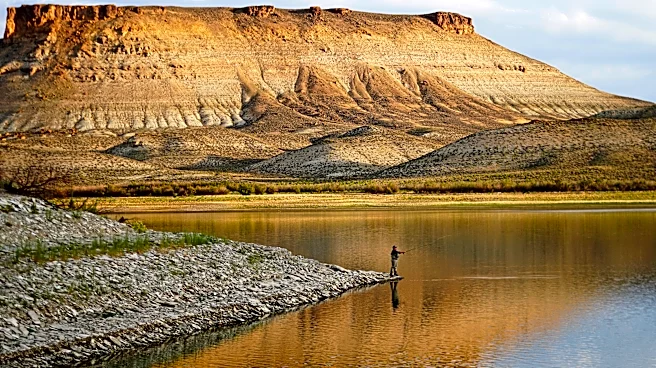
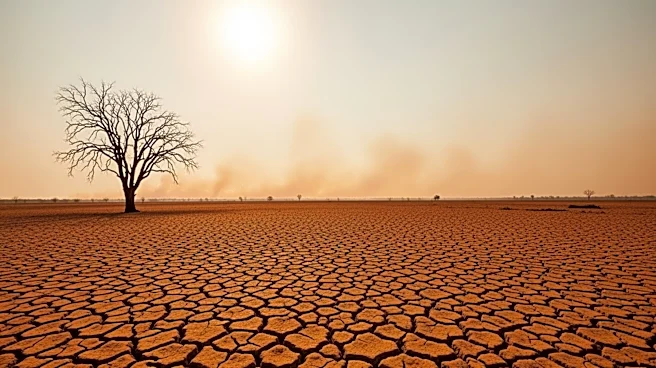
Colorado River basin has been experiencing a megadrought for 25 years, exacerbated by climate change and overuse. The river's flow has decreased by 20% between 2000 and 2019, and further reductions are expected. This situation is critical for the 40 million people dependent on the river, as water levels in key reservoirs like Lake Mead are projected to drop significantly.
Why It's Important?
The water shortages in the Colorado River basin have far-reaching implications for the U.S. Southwest, affecting urban water supply, agriculture, and energy production. Cities have already made significant strides in reducing water use, but the ongoing drought and climate change require more drastic measures. The situation highlights the need for comprehensive water management strategies that address both urban and agricultural water use. Failure to adapt could lead to severe economic and social consequences, including increased water costs, reduced agricultural output, and potential energy shortages due to low reservoir levels.
What's Next?
Stakeholders must consider renegotiating water rights and implementing more sustainable water management practices. This includes addressing agricultural water use, which accounts for the majority of consumption in the region. Policymakers may need to explore alternative water sources, such as desalination, and invest in infrastructure to support water conservation and reuse. The upcoming renewal of the Colorado River Compact presents an opportunity to establish a more equitable and sustainable water allocation system. Immediate action is necessary to prevent further deterioration of water resources and ensure long-term water security for the region.