


What's Happening?
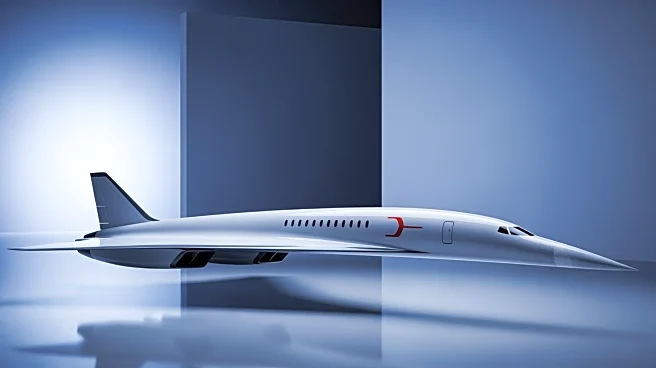
NASA's X-59, an experimental quiet supersonic aircraft, is gearing up for its second flight, marking a significant step in the agency's efforts to develop quieter supersonic travel. The aircraft underwent engine run testing at NASA's Armstrong Flight
Research Center in California. The upcoming flight will be piloted by NASA test pilot Jim 'Clue' Less, with Nils Larson observing from a nearby NASA F/A-18 aircraft. The X-59's first flight occurred on October 28, 2025, and since then, extensive maintenance and inspections have been completed. The second flight will focus on envelope expansion, gradually increasing speed and altitude to reach the aircraft's mission parameters of Mach 1.4 at 55,000 feet. This phase is part of NASA's Quesst mission, which aims to demonstrate that supersonic flight can be achieved with a quieter sonic boom, potentially revolutionizing commercial air travel.
Why It's Important?
The X-59's development is crucial for the future of commercial aviation, as it seeks to address the noise pollution associated with supersonic travel. By reducing the sonic boom to a quieter 'thump,' NASA aims to make supersonic flights over land feasible, which could significantly reduce travel times. This advancement could lead to regulatory changes, allowing for the reintroduction of supersonic passenger flights, which have been largely absent since the Concorde's retirement. The success of the X-59 could also spur innovation in aircraft design and propulsion systems, benefiting the aerospace industry and potentially leading to new economic opportunities.
What's Next?
Following the second flight, NASA will continue with envelope expansion tests, gradually increasing the X-59's speed and altitude. The next phase will involve validating the aircraft's acoustic performance, studying how its design disperses shock waves to minimize the sonic boom. NASA plans to fly the X-59 over selected U.S. communities to gather data on public perception of its quieter sound signature. The results will be shared with U.S. and international regulators, potentially influencing future aviation policies and standards.