
What's Happening?
California has experienced a significant increase in mushroom poisoning cases, with recent reports indicating four fatalities and numerous illnesses. The California Department of Public Health has documented
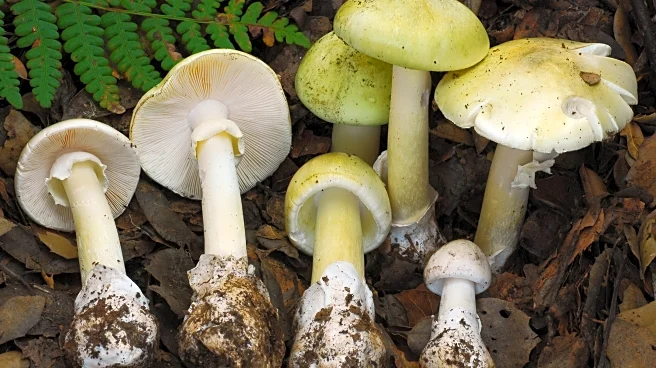
39 cases related to the death cap mushroom, Amanita phalloides, between November 18 and January 18. This surge has prompted public health officials and mycological societies to raise awareness about the dangers of foraging wild mushrooms. The incidents have predominantly affected individuals who speak Spanish, Mixteco, Mandarin Chinese, Ukrainian, Russian, and English. Efforts are underway to distribute multilingual warning signs and informational fliers in recreational areas to prevent further incidents.
Why It's Important?
The rise in mushroom poisonings highlights the critical need for public education on the risks associated with foraging wild mushrooms. The fatalities and severe illnesses underscore the potential health hazards, particularly for communities unfamiliar with local mushroom species. This situation also emphasizes the importance of cultural sensitivity in public health messaging, as many affected individuals may mistake toxic mushrooms for edible varieties familiar in their home countries. The response from health officials and mycological societies aims to mitigate these risks through increased awareness and preventive measures.
What's Next?
Public health officials and mycological societies will continue to collaborate on educational initiatives to inform the public about the dangers of wild mushroom consumption. These efforts include the distribution of warning materials in multiple languages and the organization of community events to educate foragers. Additionally, there may be increased monitoring and reporting of mushroom-related incidents to better understand and address the issue. The ongoing dialogue between health authorities and community groups is crucial to preventing further poisonings and ensuring public safety.
Beyond the Headlines
The mushroom poisoning incidents in California reveal deeper issues related to cultural practices and the integration of immigrant communities into local ecosystems. The challenge lies in balancing the appreciation of natural resources with safety precautions. This situation also raises questions about the role of social media and technology in disseminating accurate information about foraging. As communities become more aware of the risks, there may be a shift towards more responsible and informed foraging practices, potentially leading to a broader understanding of local biodiversity.