








What's Happening?
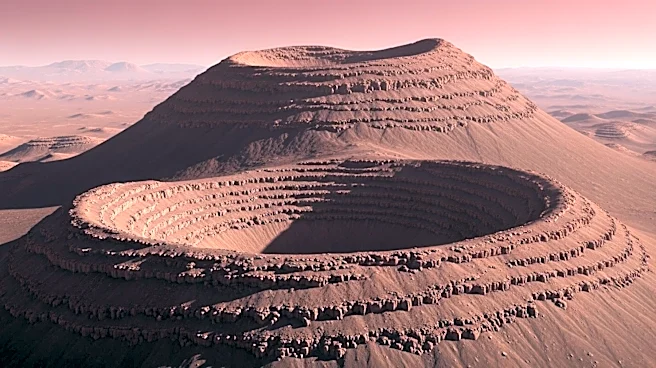
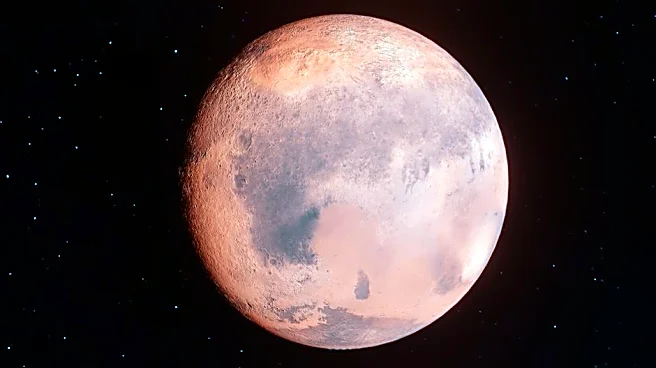
Olympus Mons, located on Mars, is the tallest volcano in the solar system, standing at approximately 22 kilometers above the surrounding plains. Despite its immense height, the volcano's gentle slopes make it difficult to perceive as a mountain from the ground.
Olympus Mons spans roughly 600 kilometers across, making it broader than many countries. Its formation is attributed to Mars' lack of tectonic plate movement, allowing lava to accumulate in one location over time. The volcano's size and structure offer unique insights into Martian geology and the planet's volcanic history.
Why It's Important?
Understanding Olympus Mons provides valuable information about volcanic activity on Mars and the planet's geological evolution. The volcano's size and formation process differ significantly from Earth's volcanic systems, offering a comparative perspective on planetary geology. Studying Olympus Mons can enhance our knowledge of Mars' crust and mantle dynamics, contributing to broader scientific understanding of planetary formation and evolution. This knowledge is essential for future Mars exploration missions, as it informs landing site selection and potential resource utilization.
Beyond the Headlines
The study of Olympus Mons also raises questions about the potential for past or present life on Mars. The presence of volcanic activity could have created environments conducive to microbial life. Additionally, the volcano's structure and composition may provide clues about Mars' climate history and the presence of water. These factors make Olympus Mons a key area of interest for astrobiologists and planetary scientists seeking to unravel the mysteries of Mars.