

What's Happening?
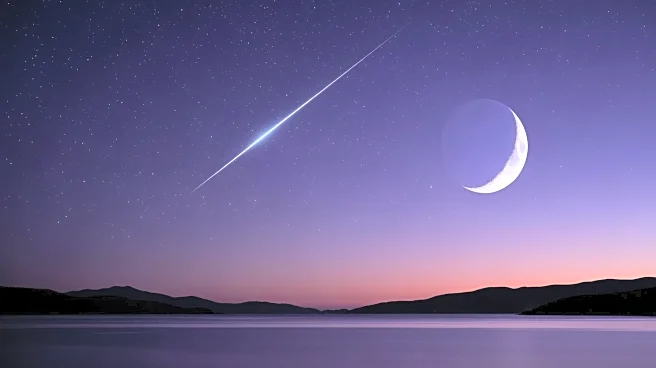
In 2026, residents of Northern California can anticipate a series of remarkable celestial events, including a total lunar eclipse, two supermoons, and eleven meteor showers. The total lunar eclipse, visible over California, will occur on March 3, turning
the moon a rusty red as it passes through Earth's shadow. Additionally, two supermoons will appear on November 24 and December 23, when the moon is closest to Earth, making it appear larger and brighter. The year will also feature major meteor showers such as the Perseids in August and the Geminids in December, offering spectacular night sky displays. These events are best viewed from dark locations away from city lights, with Lassen Volcanic National Park and Whiskeytown National Recreation Area being recommended spots for stargazing.
Why It's Important?
These celestial events provide unique opportunities for education and engagement with astronomy, encouraging people to explore the natural world beyond their immediate environment. The visibility of such events in Northern California highlights the region's potential as a destination for astro-tourism, which can boost local economies by attracting visitors. Moreover, these events offer a chance for community gatherings and educational programs, fostering a greater appreciation for science and nature. The predictable nature of these events allows for planning and organizing public viewing events, potentially involving local schools and science organizations.
What's Next?
As the dates for these celestial events approach, local organizations and educational institutions may plan public viewing events and educational programs to maximize public engagement. Astronomy clubs and science centers might organize workshops and talks to educate the public about these phenomena. Additionally, local businesses could capitalize on increased tourism by offering special packages or events related to the celestial occurrences. The anticipation of these events could also lead to increased interest in astronomy and science education in the region.