




What's Happening?
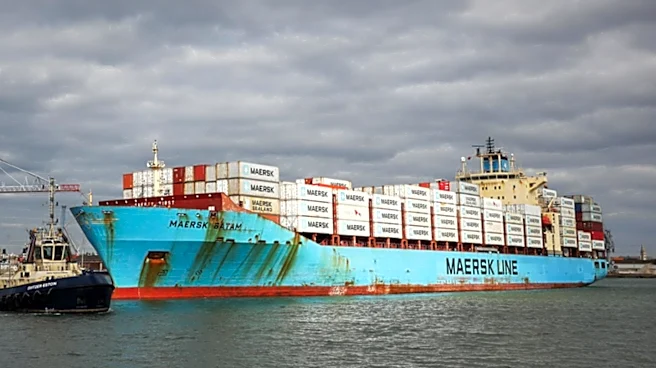
Workers at the Port of Tacoma encountered an unusual sight early Monday morning: a 70-foot whale carcass lodged on the bow of an Evergreen cargo ship. Marine mammal experts, in collaboration with the Washington Department of Fish and Wildlife, are investigating
the incident to determine the cause of death and the species of the whale. Preliminary assessments suggest it may be an endangered fin whale, though its decomposed state necessitates a necropsy or genetic testing for definitive identification. Ashley Lathrop, a local worker, expressed her astonishment, stating she had never witnessed such an event. The carcass was towed out of the port's Blair Dock to an undisclosed location on McNeil Island, where investigators will conduct further examinations. This incident is not unprecedented, as stranded whales on vessel bows have occurred periodically, according to Fish and Wildlife investigators working with the West Coast Marine Mammal Stranding Network.
Why It's Important?
The discovery of an endangered fin whale carcass on a cargo ship's bow at the Port of Tacoma highlights significant environmental and maritime concerns. Fin whales are a protected species, and their population off the West Coast is already shrinking, with only about 8,000 individuals recorded in 2018. The death of even one such whale represents a loss to a vulnerable population. This incident underscores the ongoing threat that large vessel traffic poses to marine wildlife, particularly in busy shipping lanes. Ship strikes are a known cause of whale mortality, and investigations into this event could provide crucial data to inform future mitigation strategies. For the shipping industry, such occurrences can lead to operational delays and potential public scrutiny, emphasizing the need for enhanced awareness and preventative measures. The involvement of the Washington Department of Fish and Wildlife and the West Coast Marine Mammal Stranding Network demonstrates the collaborative effort required to monitor and protect marine ecosystems, reflecting a broader commitment to conservation in U.S. coastal regions.
What's Next?
Investigators from the Washington Department of Fish and Wildlife and the West Coast Marine Mammal Stranding Network will conduct a necropsy on the 70-foot whale carcass at McNeil Island to definitively identify the species and determine the cause of death. If the decomposition is too advanced, genetic testing will be performed. The findings from this investigation could lead to recommendations for the shipping industry, potentially including adjustments to shipping routes, speed restrictions in critical whale habitats, or enhanced monitoring technologies to prevent future ship strikes. The incident may also prompt increased public awareness campaigns regarding marine mammal protection and the importance of reporting stranded animals. Evergreen Shipping has been contacted for comment, and their response could shed light on whether the ship's crew was aware of the carcass prior to arrival. The ongoing data collection on whale strandings and mortalities is vital for conservation efforts and for understanding the cumulative impacts of human activities on marine ecosystems along the U.S. West Coast.
Beyond the Headlines
This event transcends a mere news item about a deceased whale; it serves as a stark reminder of the intricate and often perilous intersection between global commerce and marine biodiversity. The presence of an endangered fin whale on a cargo ship's bow symbolizes the invisible toll that international shipping can take on ocean life. It raises ethical questions about the responsibility of maritime industries to protect marine ecosystems and the effectiveness of current conservation measures. The incident could catalyze broader discussions on sustainable shipping practices, the implementation of advanced whale detection systems, and the enforcement of stricter environmental regulations in busy port areas. Culturally, such events often evoke public empathy and can galvanize support for marine conservation initiatives, influencing policy decisions and consumer behavior. The long-term implications could include a push for greater transparency from shipping companies regarding their environmental impact and a re-evaluation of how economic activities can coexist with the preservation of endangered species in U.S. waters.