
What's Happening?
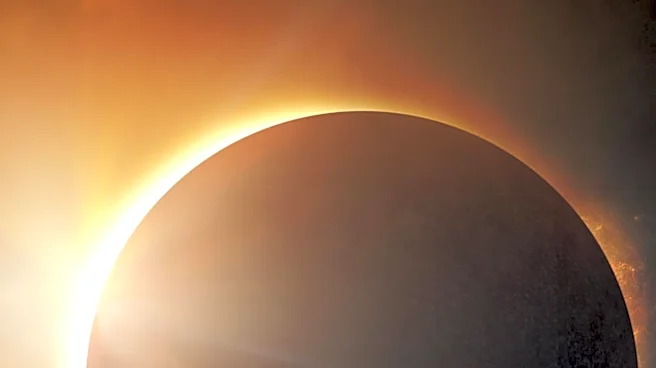
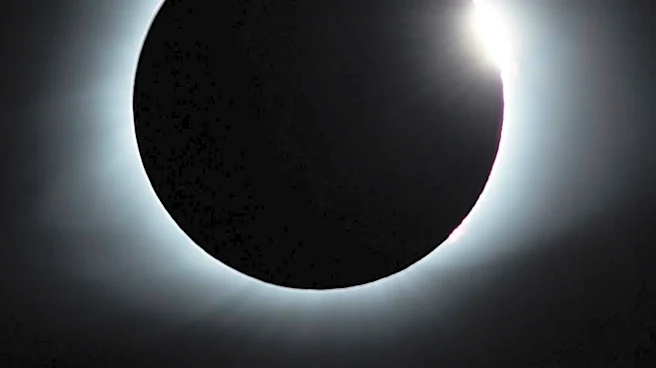
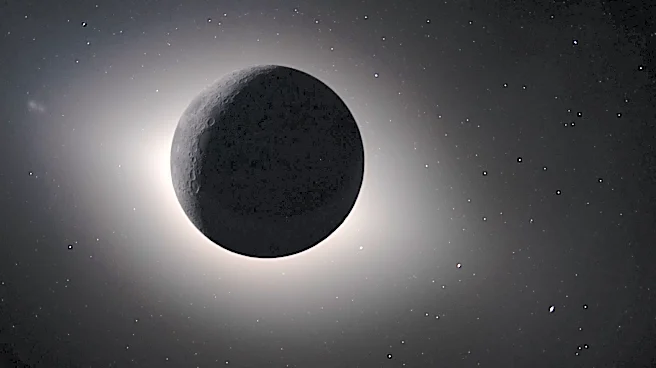
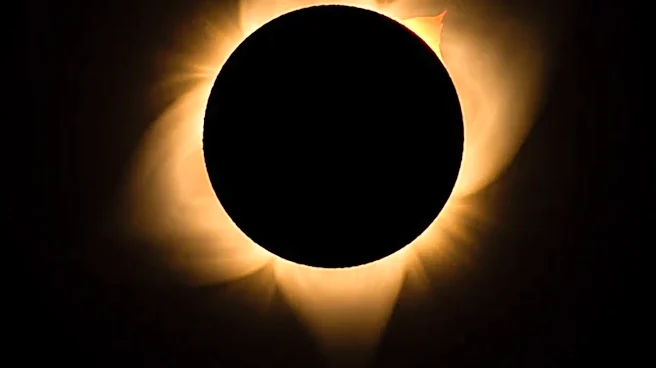
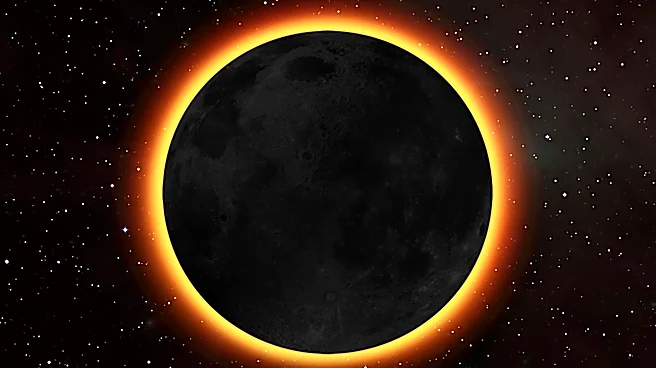
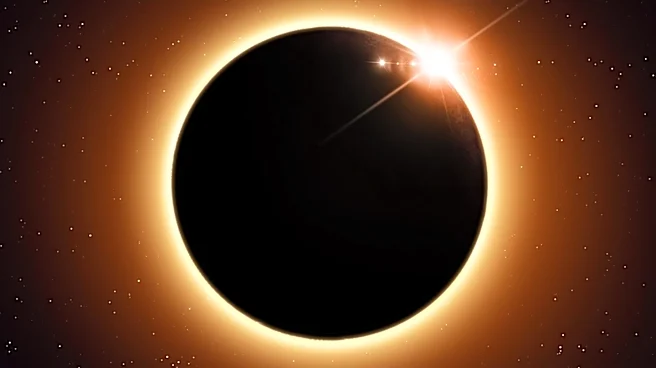
A total solar eclipse is set to occur on August 12, 2026, sweeping across mainland Spain, Iceland, and Greenland. This event marks the first time in over a century that a total solar eclipse will be visible from mainland Spain. The eclipse will begin
near the North Pole and move southward, with totality lasting up to two minutes and 18 seconds. The event coincides with a six-planet alignment visible before dawn and the Perseid meteor shower peaking after nightfall. Eclipse enthusiasts, including mapmaker Michael Zeiler, are preparing to capture the event, with Zeiler planning to film the northern lights from a cruise ship in Greenland. The European Space Agency and NASA will provide live coverage, and various scientific teams will conduct experiments during the eclipse.
Why It's Important?
The total solar eclipse presents a unique opportunity for scientific observation and public engagement. It allows researchers to study the sun's corona and atmospheric changes during the brief period of totality. The event also serves as a significant cultural and educational moment, drawing attention to astronomical phenomena and fostering a sense of global connection through shared observation. The eclipse's visibility across multiple countries highlights the importance of international collaboration in scientific research and public outreach. Additionally, the event is expected to attract tourists and eclipse chasers, providing economic benefits to the regions within the path of totality.
What's Next?
Following this eclipse, another significant solar event is anticipated in 2027, with a longer duration of totality. This upcoming eclipse will provide further opportunities for scientific study and public engagement. The European Space Agency and other organizations are likely to continue their efforts in promoting awareness and understanding of such celestial events. The ongoing interest in solar eclipses underscores the need for continued investment in space science and education, as well as the development of technologies to enhance observation and data collection.