




What's Happening?
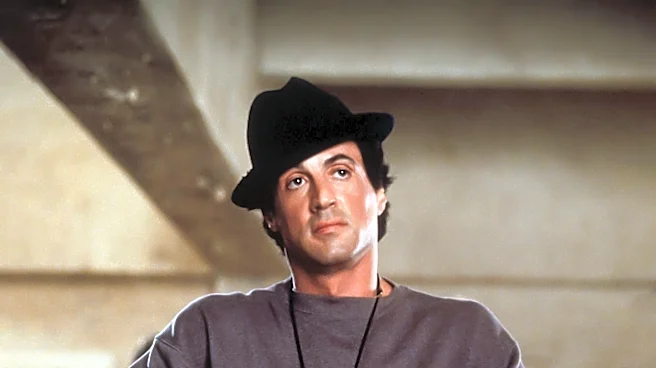
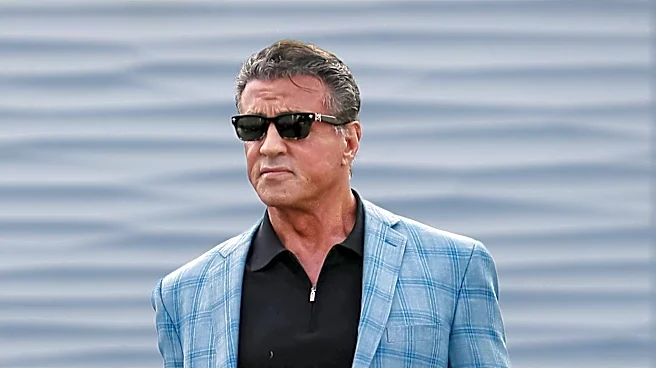
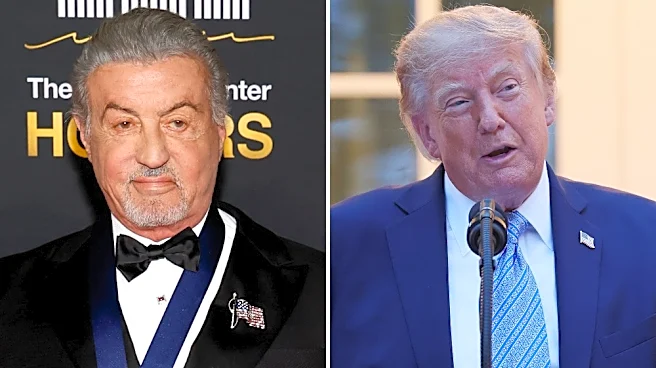
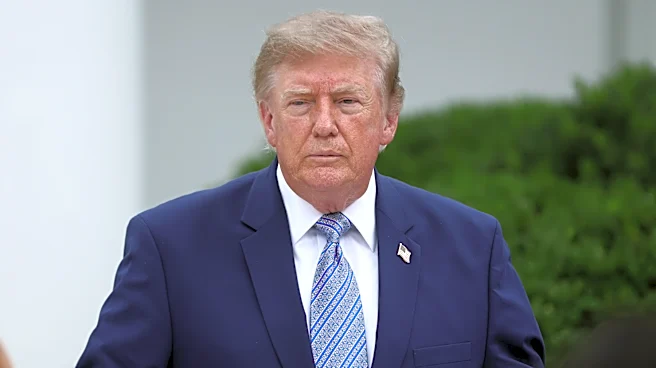
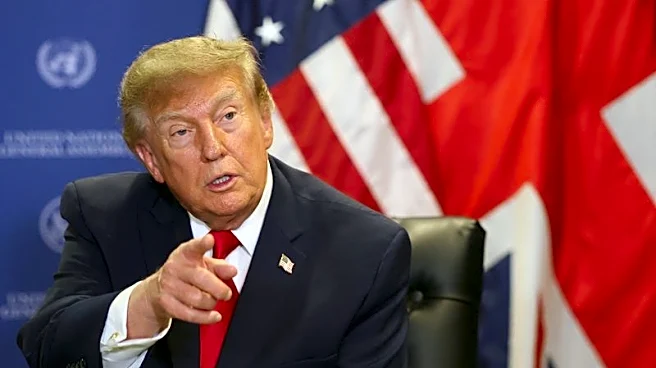
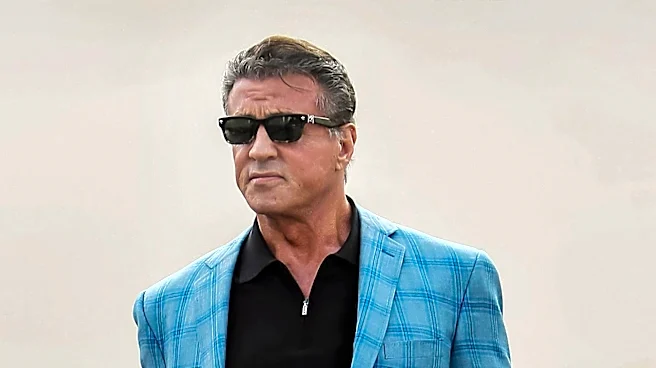
Actor Sylvester Stallone has revealed he issued a warning to President Trump after being appointed as a Hollywood special envoy in 2025. Stallone, along with Mel Gibson and Jon Voight, was named by President Trump as a special ambassador to Hollywood,
a move intended to 'help' the film industry. Despite being a supporter of President Trump and his MAGA movement, Stallone admitted he was not fond of the role. He expressed his concerns to President Trump, stating that the job was 'not possible' and that Hollywood is a corporate environment where his financial advice would not be welcomed. Stallone also highlighted the fragmented nature of Hollywood, describing it as 'feudal states,' making it difficult for one person to dictate operations to multiple studios. President Trump had announced these appointments in January 2025, aiming to bring Hollywood business back to the U.S., envisioning a 'Golden Age of Hollywood' with these envoys serving as his 'eyes and ears.'
Why It's Important?
This development highlights the complex relationship between Hollywood and political administrations, particularly concerning attempts to influence or 'help' the film industry through political appointments. Stallone's reluctance and subsequent warning to President Trump underscore the industry's independent and corporate nature, suggesting that external political intervention may not be well-received or effective. The incident reveals a potential disconnect between political aspirations to 'revitalize' an industry and the practical realities of its internal workings. For President Trump, this could signify a challenge in garnering full cooperation from influential figures, even those who are supporters, when it comes to direct involvement in industry operations. For Hollywood, it reinforces its autonomy and resistance to top-down political directives, emphasizing that its evolution is driven by internal corporate dynamics rather than external political mandates. This dynamic could influence future interactions between political leaders and the entertainment sector, potentially shaping how such appointments are perceived and whether they are seen as genuine collaborations or political gestures.
What's Next?
The future implications of Stallone's warning could manifest in several ways. It may lead to a re-evaluation of how political administrations approach engagement with the entertainment industry, potentially shifting towards more collaborative, less directive strategies. Other Hollywood figures might be emboldened to voice similar reservations about politically appointed roles, further asserting the industry's independence. President Trump's administration might need to adjust its approach to 'helping' Hollywood, perhaps focusing on broader economic policies rather than specific ambassadorial roles that are met with skepticism. Conversely, the incident could also deepen the divide between politically aligned factions within Hollywood, with some continuing to support direct political engagement while others advocate for strict separation. The long-term impact on the 'Golden Age of Hollywood' initiative envisioned by President Trump remains to be seen, as the effectiveness of such programs hinges on the willingness of industry leaders to participate meaningfully.
Beyond the Headlines
Beyond the immediate political and industry implications, this situation touches upon broader themes of artistic independence versus political influence. The entertainment industry, particularly Hollywood, often serves as a significant cultural and economic force, and attempts by political figures to 'guide' or 'revitalize' it can raise questions about censorship, creative freedom, and the role of art in society. Stallone's comments about Hollywood being 'corporate' and 'feudal states' highlight the intricate power structures and economic drivers that shape the industry, suggesting that its trajectory is determined by market forces and internal dynamics rather than political decree. This event could also spark discussions about the appropriate boundaries between celebrity endorsement and active political roles, and whether public figures should accept positions that might compromise their artistic integrity or perceived neutrality. The incident serves as a reminder of the inherent tension that can exist when political ambitions intersect with the complex, often self-governing, world of arts and entertainment.