



What's Happening?
The US Marine Corps is actively seeking a new type of camouflage garment designed to protect troops from detection by advanced thermal-imaging sensors. This initiative comes in response to the increasing use of thermal-imaging technology on modern battlefields,
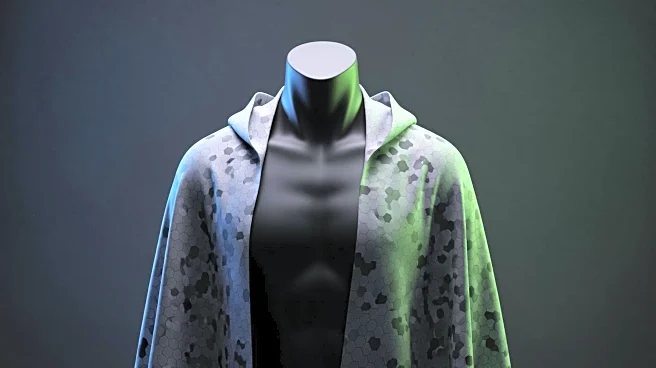
such as those seen in the Ukraine conflict. The Marines have issued a 'sources sought' notification to find vendors capable of creating a 'Multispectral Camouflage Overgarment.' This garment aims to provide comprehensive concealment across various spectrums, including visual, near-infrared, and thermal, to reduce the likelihood of detection by enemy sensors. The cloak is intended to be a single-piece, full-body covering that can be quickly donned over a Marine's uniform and equipment, functioning effectively in diverse environmental conditions. The goal is to have over 61,000 of these cloaks available by fiscal year 2030.
Why It's Important?
The development of this advanced camouflage technology is crucial for maintaining the operational effectiveness and safety of US Marines in increasingly sensor-saturated battlefields. As adversaries employ more sophisticated detection systems, the ability to remain undetected becomes vital for mission success and troop survival. The cloak's ability to mask heat signatures and electronic emissions could significantly reduce the risk of detection by enemy drones and surveillance systems, which are prevalent in modern conflicts. This technology not only enhances the Marines' stealth capabilities but also aligns with broader military efforts to adapt to the evolving nature of warfare, where precision targeting and sensor-based reconnaissance play a pivotal role.
What's Next?
The Marine Corps will continue to evaluate potential vendors and technologies to develop the Multispectral Camouflage Overgarment. As the project progresses, the military will likely conduct field tests to assess the effectiveness of the cloaks in various operational scenarios. The successful implementation of this technology could lead to its adoption across other branches of the US military, further enhancing the stealth capabilities of American forces. Additionally, the development of such advanced camouflage could prompt adversaries to seek countermeasures, potentially leading to an ongoing technological arms race in battlefield concealment.