






What's Happening?
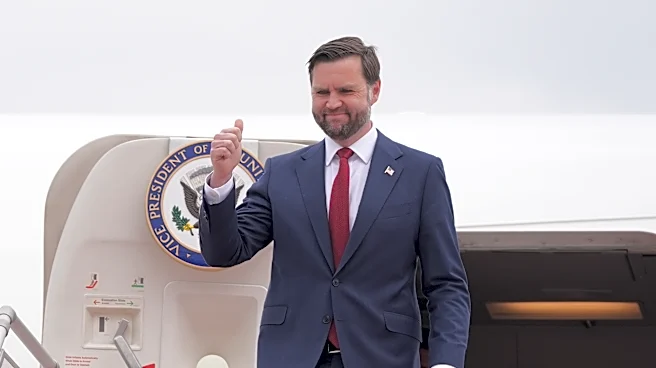
Vice President JD Vance announced that the U.S. and Iran did not reach a peace agreement after marathon talks in Pakistan. The discussions, lasting 21 hours, aimed to end the six-week conflict in the Middle East. Key issues included Iran's nuclear program
and control over the Strait of Hormuz. Despite substantive discussions, Iran's demands for sovereignty over the strait and reparations were not met. The U.S. delegation, led by Vance, emphasized the need for Iran to commit to not developing nuclear weapons.
Why It's Important?
The failure to secure a peace agreement underscores the complexities of U.S.-Iran relations and the challenges in achieving stability in the Middle East. The unresolved issues, particularly regarding nuclear capabilities and strategic waterways, pose significant risks to regional and global security. The U.S. aims to prevent nuclear proliferation, a critical concern for international peace. The ongoing tensions could lead to further military confrontations, affecting diplomatic efforts and economic interests worldwide.
What's Next?
The U.S. and Iran remain at an impasse, with the potential for renewed hostilities if diplomatic solutions are not found. The international community will likely monitor the situation closely, as any escalation could have widespread implications. The U.S. may continue to apply pressure through military and economic means, while Iran could leverage its control over the Strait of Hormuz to influence negotiations.