






What's Happening?
A recent report by the One Free Press Coalition, in collaboration with the Committee to Protect Journalists (CPJ), International Women's Media Foundation (IWMF), and Reporters Without Borders (RSF), has highlighted the plight of journalists imprisoned
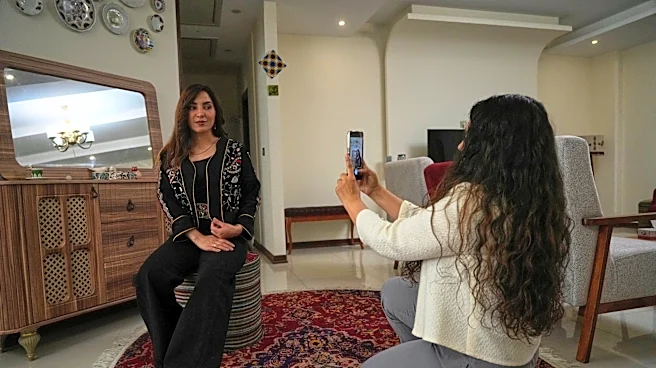
worldwide. The report, released to coincide with World Press Freedom Day, lists the '10 most urgent' cases of journalists detained for their work. At the top of this year's list is Iranian-American journalist Reza Valizadeh, who was sentenced to 10 years in prison in Iran for 'collaboration with the hostile government of the United States.' The report underscores that 61% of journalists jailed globally are held on 'anti-state' charges, which often include accusations of terrorism or receiving funds from foreign governments. The RSF data indicates a concerning decline in press freedom, with 100 out of 180 countries experiencing a drop in their press freedom scores.
Why It's Important?
The imprisonment of journalists poses a significant threat to press freedom and the dissemination of information globally. The report's findings highlight a troubling trend where journalists are increasingly targeted under 'anti-state' charges, which can stifle free speech and hinder the public's access to unbiased information. This situation has broader implications for democratic societies, where a free press is essential for holding governments accountable and informing citizens. The decline in press freedom scores in numerous countries suggests a growing environment of censorship and repression, which could lead to a less informed public and weakened democratic institutions. The report serves as a call to action for international bodies and governments to address these violations and protect journalists' rights.
What's Next?
The report by the One Free Press Coalition aims to draw international attention to these urgent cases and advocate for the release of imprisoned journalists. It is expected that human rights organizations and press freedom advocates will continue to pressure governments to uphold international standards for freedom of expression. Additionally, the report may prompt discussions at international forums and among policymakers about the need for stronger protections for journalists and the press. The ongoing monitoring of press freedom conditions by organizations like RSF and CPJ will be crucial in assessing progress and identifying areas where further advocacy is needed.