

What's Happening?
A team of physicists has proposed a novel method to detect dark matter decay into gravitons, which may then transform into photons. This approach, detailed in a paper published in Physical Review D, suggests that dark matter particles could decay into gravitons, hypothetical
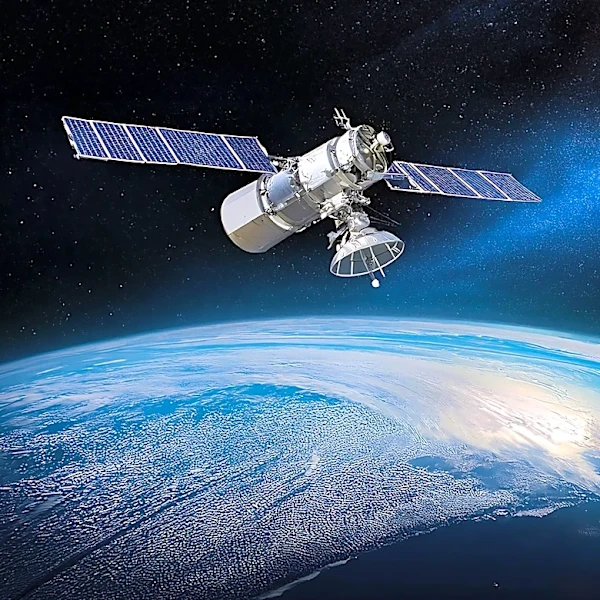
particles believed to carry the force of gravity. These gravitons might convert into gamma-ray photons as they travel through cosmic magnetic fields. The researchers emphasize that this method aligns with the Standard Model of particle physics and could shift the focus of dark matter detection from galactic centers to intergalactic space. The study suggests using the Advanced Particle-astrophysics Telescope to enhance sensitivity to this decay channel.
Why It's Important?
This research could significantly impact the field of astrophysics by providing a new avenue for detecting dark matter, a substance that constitutes most of the universe's matter but remains largely mysterious. By potentially identifying dark matter decay into gravitons, scientists could gain insights into the fundamental forces of the universe. This method also challenges current dark matter detection strategies, which often focus on galactic centers, by suggesting that intergalactic space might be a more fruitful area for study. The findings could lead to advancements in understanding the universe's structure and the forces that govern it.
What's Next?
Future research will likely involve using the Advanced Particle-astrophysics Telescope to test this new detection method. If successful, this could lead to a paradigm shift in how scientists search for dark matter. The research community may also explore further theoretical and experimental work to validate the existence of gravitons and their role in dark matter decay. This could open new research collaborations and funding opportunities aimed at exploring these cosmic phenomena.