





What's Happening?
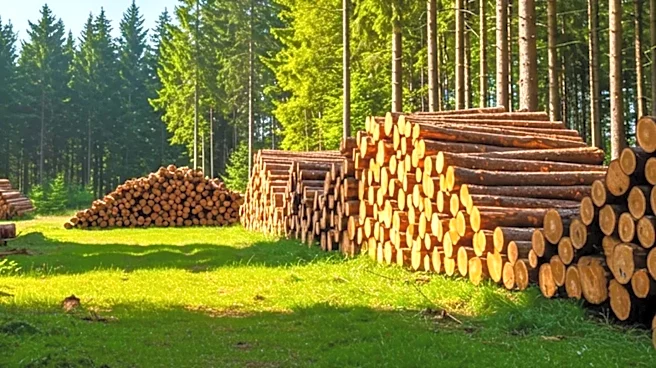
The U.S. Forest Service (USFS) is grappling with the complex task of balancing logging activities with forest health initiatives, as highlighted by a Sierra Club field trip examining practices in the Lassen National Forest. The field trip observed extensive
tree cutting and brush mastication along Highway 44, creating what is described as an 'ecological dead zone' for wildlife. While the USFS states these actions are intended to reduce fuels, improve forest health, and enhance wildlife habitat, the immediate impact raises questions about the effectiveness and ecological consequences of such large-scale interventions. This situation underscores the ongoing debate and challenges in managing national forests for multiple objectives.
Why It's Important?
The debate over logging versus forest health in U.S. national forests has significant implications for environmental policy, biodiversity, and public land management. The USFS's approach to fuel reduction and forest management directly affects ecosystems, wildlife populations, and water quality. Critics argue that aggressive logging and brush clearing, even with good intentions, can disrupt natural habitats and reduce biodiversity, potentially taking years for ecological recovery. Conversely, proponents emphasize the necessity of these measures to prevent catastrophic wildfires, which pose a growing threat to communities and forest ecosystems. The outcome of this ongoing discussion will shape future land management strategies and determine the long-term health and resilience of U.S. forests.
What's Next?
The ongoing scrutiny from environmental groups like the Sierra Club suggests that the U.S. Forest Service will continue to face pressure to refine its forest management practices. There will likely be increased calls for more transparent assessments of ecological impacts and greater public involvement in decision-making processes. Future strategies may involve a more nuanced approach that integrates diverse scientific perspectives and considers alternative methods for fuel reduction and forest health improvement, such as prescribed burns and selective thinning, with a stronger emphasis on minimizing ecological disruption. The agency may also need to enhance communication with the public to clarify the rationale and expected long-term benefits of its interventions.
Beyond the Headlines
This issue extends beyond immediate forest management decisions to touch upon fundamental questions of environmental ethics and the role of government agencies in stewarding natural resources. It highlights the tension between human intervention for perceived benefits (e.g., wildfire prevention) and the preservation of natural ecological processes. The concept of an 'ecological dead zone' raises concerns about the long-term viability of ecosystems and the potential for unintended consequences from large-scale human activities. This ongoing dialogue will likely influence public perception of conservation efforts and could lead to shifts in policy that prioritize ecosystem integrity and biodiversity alongside wildfire mitigation and timber production.