






What's Happening?
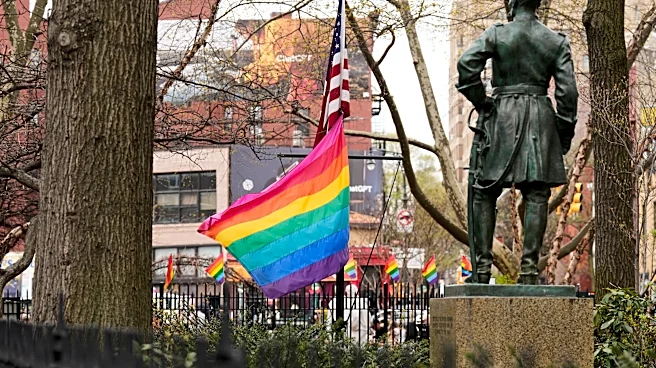
The Trump administration has agreed to resume flying the rainbow Pride flag at the Stonewall National Monument in New York City. This decision reverses a previous action taken in February to remove the flag, which had sparked a lawsuit from LGBTQ+ and
historic preservation groups. The agreement, which still requires judicial approval, stipulates that the Pride flag will be displayed alongside the U.S. and Park Service flags. The Stonewall National Monument, established in 2016, commemorates the site of the 1969 Stonewall riots, a pivotal event in the LGBTQ+ rights movement. The flag's removal had been seen as part of a broader effort by the Trump administration to alter or remove materials deemed divisive or partisan.
Why It's Important?
The decision to reinstate the Pride flag at the Stonewall Monument is significant for the LGBTQ+ community and its allies, as it represents a victory in the ongoing struggle for visibility and recognition. The Stonewall site is a symbol of the fight for LGBTQ+ rights, and the presence of the Pride flag underscores the importance of preserving this history. The move also highlights the contentious nature of cultural and historical representation under the Trump administration, which has been criticized for its approach to diversity and inclusion. This development may influence future policies regarding the representation of marginalized communities in national monuments and public spaces.
What's Next?
With the agreement to fly the Pride flag, attention may turn to how the Trump administration will handle other cultural and historical representations at national sites. The decision could prompt further legal and political challenges from advocacy groups seeking to protect or enhance the visibility of marginalized communities. Additionally, the administration's broader policies on diversity, equity, and inclusion may come under increased scrutiny, potentially affecting future elections and public opinion. The outcome of this case may also set a precedent for how similar disputes are resolved in the future, influencing the balance between federal guidelines and community advocacy.