


What's Happening?
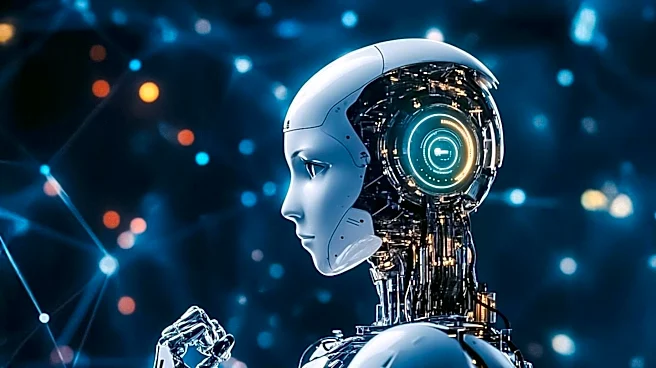
Researchers from Michigan State University have raised concerns about the reliability of artificial intelligence (AI) in NASA's life-detection missions. They conducted experiments using an AI system trained to distinguish between digital organisms capable
of replication and those that are not. While the AI performed well under normal conditions, it was easily misled when researchers introduced nonliving code that mimicked life. This raises questions about AI's ability to accurately identify extraterrestrial life, as it may misclassify unfamiliar patterns with high confidence.
Why It's Important?
The integration of AI in space missions is crucial for analyzing vast amounts of data that human scientists cannot process alone. However, the potential for AI to misinterpret data poses significant risks, especially in missions aimed at detecting life on other planets. Misclassification could lead to false positives or negatives, impacting scientific conclusions and mission outcomes. As NASA invests in AI-driven projects, ensuring the accuracy and reliability of these systems is vital to avoid costly errors and misinterpretations in space exploration.
What's Next?
The findings from Michigan State University will be presented at the 2026 Conference on Artificial Life, prompting further scrutiny and discussion on AI's role in space missions. NASA and its partners are likely to continue refining AI models to improve their accuracy and reliability. This includes training AI on a broader range of data, including non-living byproducts of life, to better distinguish between living and non-living entities. Ongoing research and development will focus on enhancing AI's ability to handle unfamiliar data, ensuring it can support future missions effectively.