
What's Happening?
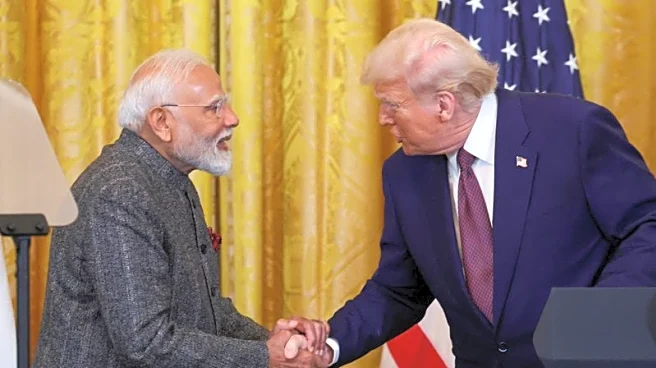
President Trump has announced a new trade deal with India, which involves significant tariff reductions on U.S. industrial goods and agricultural products. The agreement, detailed in a joint statement,
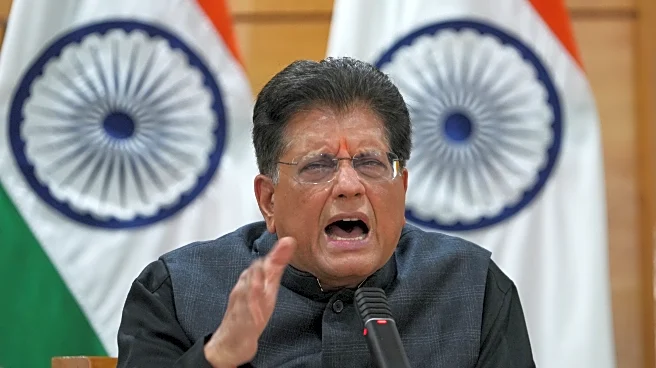
will see India eliminate or reduce tariffs on a wide range of U.S. food and agricultural products, including tree nuts, fresh fruits, soybean oil, wine, and spirits. In return, the U.S. will impose a reciprocal tariff rate of 18% on Indian goods such as textiles, apparel, leather, and certain machinery. Indian Prime Minister Narendra Modi has praised the deal for its potential to create jobs and open new opportunities. However, Indian farmer unions, particularly the Samyukt Kisan Morcha (SKM), have expressed strong opposition, labeling the deal as a 'total surrender' to American agricultural interests. They fear that the influx of cheap imports could severely impact local producers, especially in the fruit and soybean sectors. The SKM has called for a nationwide protest on February 12 to oppose the agreement.
Why It's Important?
The trade deal between the U.S. and India is significant as it could reshape agricultural trade dynamics between the two countries. For the U.S., the reduction in tariffs presents an opportunity to expand its agricultural exports to India, potentially benefiting American farmers and agricultural businesses. However, the deal poses challenges for Indian farmers, who fear that cheaper U.S. imports could undercut local prices and threaten their livelihoods. The agreement also reflects broader geopolitical considerations, as it includes India's commitment to halt Russian oil purchases, aligning more closely with U.S. foreign policy interests. The deal's impact on Indian agriculture could lead to political and social unrest, as evidenced by the planned protests, highlighting the delicate balance between economic agreements and domestic agricultural policies.
What's Next?
The immediate next step involves the implementation of the trade deal's terms, which will require adjustments in both countries' tariff structures. Indian farmers and their unions are likely to continue their opposition, potentially leading to widespread protests and political pressure on the Indian government to renegotiate or amend the deal. The U.S. agricultural sector may begin to strategize on how to capitalize on the new market opportunities in India. Additionally, the deal's geopolitical implications, particularly India's stance on Russian oil, may influence future diplomatic relations and trade negotiations between the U.S. and India.