





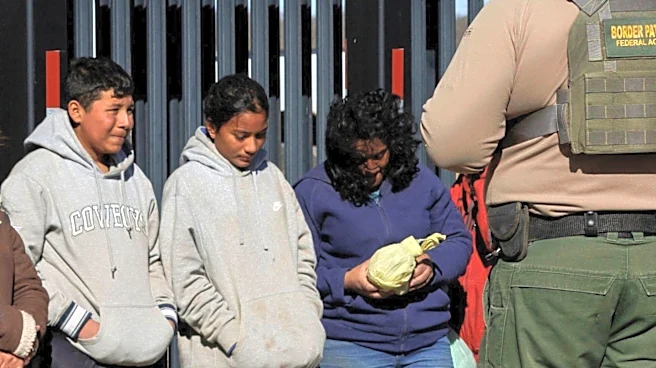

What's Happening?
A breastfeeding mother with a pending asylum claim was detained by Immigration and Customs Enforcement (ICE) agents in Nashville, Tennessee, in May. The woman, originally from Guatemala, was arrested while preparing to take her two young children to a doctor's
appointment. Human rights organizations, including Amnesty International and the Tennessee Immigration & Refugee Rights Coalition, have filed a complaint with the Department of Homeland Security's Office of Inspector General, arguing that ICE violated its own policies against detaining nursing mothers. The woman is currently held in a Louisiana facility, 700 miles from her children, who have not seen her since her arrest. The complaint highlights the significant harm caused by separating a nursing mother from her children, particularly as one child has Down syndrome and multiple medical conditions.
Why It's Important?
The detention of the nursing mother underscores ongoing concerns about ICE's adherence to its own guidelines, which generally prohibit the detention of pregnant, postpartum, and nursing women unless under exceptional circumstances. This case has drawn attention to the broader issue of how immigration policies impact vulnerable populations, including children and those with medical needs. The situation also reflects the challenges faced by asylum seekers in the U.S. immigration system, where procedural delays and policy enforcement can lead to prolonged family separations. The advocacy groups involved are pushing for the woman's immediate release, emphasizing the potential irreversible harm to her and her children.
What's Next?
The advocacy organizations have demanded that ICE provide written confirmation of any exceptional circumstances justifying the woman's continued detention. They are also calling for her immediate release to allow her to resume caring for her children. The case may prompt further scrutiny of ICE's detention practices, particularly regarding the treatment of nursing mothers and other vulnerable groups. Legal and human rights organizations are likely to continue monitoring and challenging similar cases to ensure compliance with established guidelines.