


What's Happening?
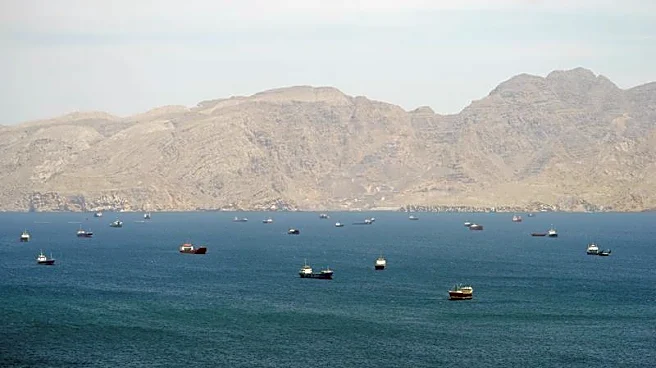
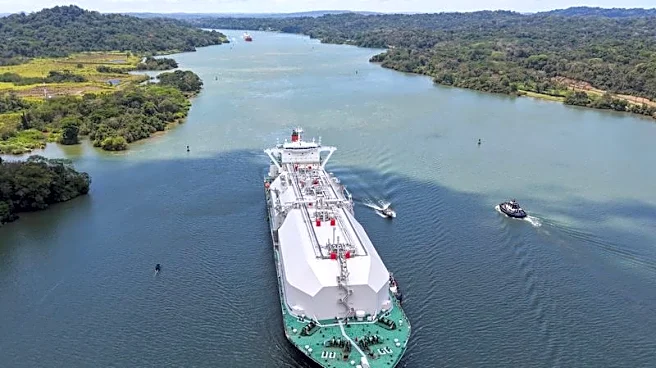
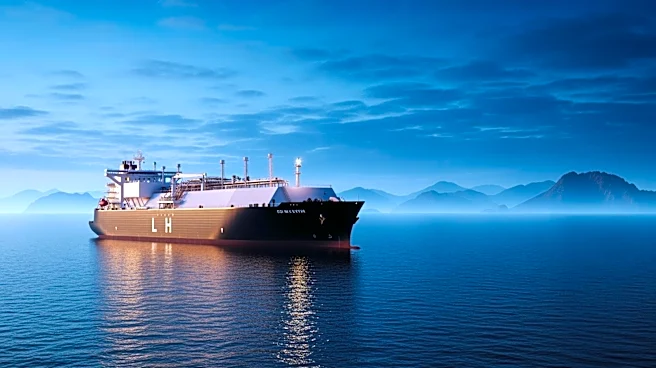
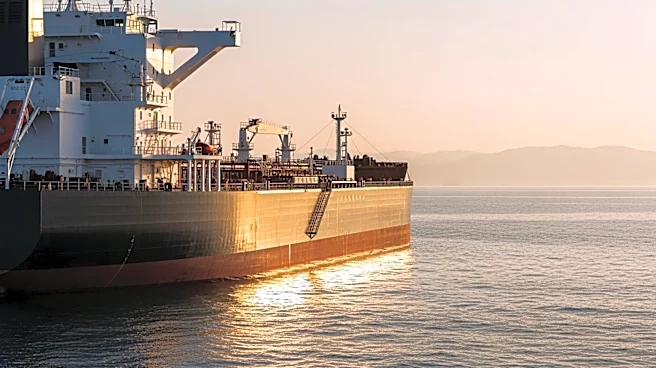
An LNG tanker managed by the UAE's ADNOC has successfully crossed the Strait of Hormuz, marking the first such crossing since the onset of the Iran war on February 28. The tanker, carrying 136,357 cubic meters of LNG, was last seen in the Gulf on March
30 and has now appeared off the west coast of India. This crossing is significant given the recent challenges faced by vessels in the region, including evasive tactics to avoid detection. The crossing could signal a potential easing of tensions in the region, although official confirmation of the tanker's position is still pending.
Why It's Important?
The successful crossing of the Strait of Hormuz by an LNG tanker is a hopeful sign for the global gas market, which has been affected by regional instability. The strait is a critical chokepoint for global energy supplies, and any disruption can have significant implications for energy prices and supply chains. The ability of tankers to navigate the strait safely could help stabilize the market and ensure the continued flow of energy resources. However, the situation remains fluid, and further developments could impact the security and economic landscape in the region.
What's Next?
Monitoring of the situation in the Strait of Hormuz will continue, with attention on the movements of other tankers and potential changes in regional security dynamics. The international community will likely keep a close watch on developments to assess the impact on global energy markets. Any escalation or resolution of tensions could influence future shipping routes and strategies. The outcome of this situation may also affect diplomatic relations and negotiations related to regional security and trade.