





What's Happening?
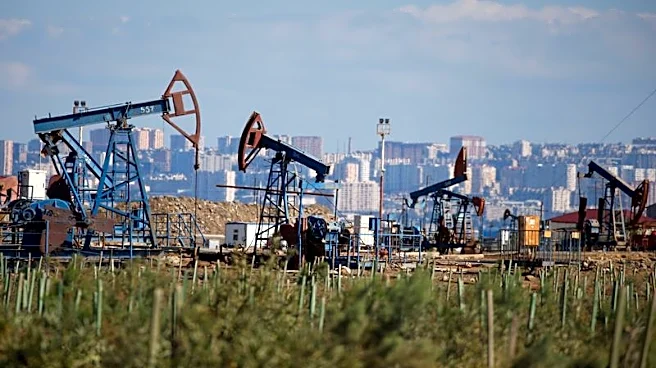
U.S. efforts to restore freedom of navigation in the Strait of Hormuz appear to be challenging Iran's ability to control the vital waterway. U.S. officials reported that approximately 40 vessels, carrying millions of barrels of oil, transited the Strait on September
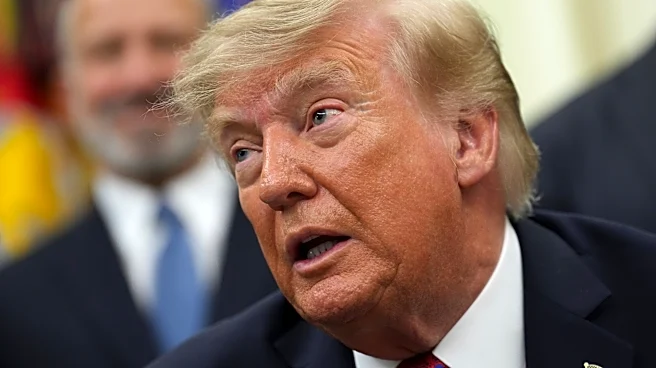
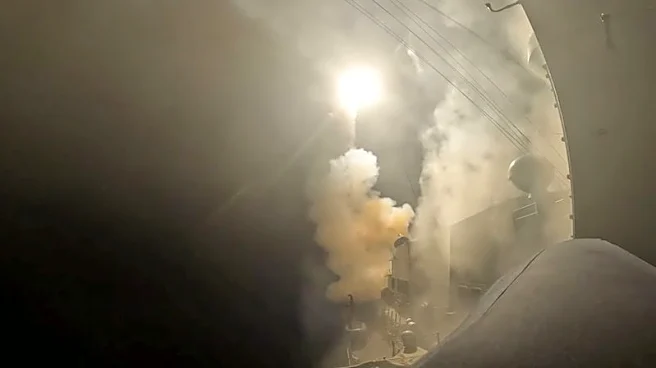
1, with oil export volumes reaching near pre-war levels. This indicates Iran is struggling to prevent commercial vessels from using the southern route. Concurrently, Iran is attempting to reconstitute its military capabilities in the Strait, with President Trump stating that the U.S. struck Iranian radar systems again on September 1 after they were nearly rebuilt. U.S. Central Command (CENTCOM) confirmed these strikes targeted Iranian air defense sites, radar systems, maritime assets, mine-laying capabilities, and communications sites. Separately, the Islamic Revolutionary Guards Corps (IRGC) claimed missile and drone attacks on U.S. bases in Kuwait, Jordan, Bahrain, and Iraq on September 2, with U.S. air defenses intercepting two Iranian drones targeting a U.S. base in Erbil, Iraqi Kurdistan.
Why It's Important?
This situation is critical for global energy security and regional stability. The Strait of Hormuz is a chokepoint for a significant portion of the world's oil supply, and any disruption there has immediate and far-reaching economic consequences. The U.S. actions to ensure freedom of navigation are vital to maintaining global oil flows and preventing price spikes. Iran's persistent attempts to assert control over the Strait, despite U.S. military pressure, underscore its strategic objective to leverage the waterway for political and economic gain. The renewed attacks on U.S. bases in the region, coupled with messaging to local populations, aim to pressure host countries to reduce military cooperation with the United States. This strategy seeks to undermine U.S. influence and presence in the Middle East, potentially destabilizing alliances and creating a more volatile security environment. The reported failure rate of Iranian ballistic missiles fired at Jordan also raises questions about the effectiveness of Iran's longer-range missile capabilities, which could influence regional military balances.
What's Next?
The U.S. will likely continue its operations to ensure freedom of navigation in the Strait of Hormuz and counter Iranian attempts to disrupt shipping. This includes ongoing surveillance, interdiction, and defensive strikes against Iranian military assets that pose a threat. Iran is expected to persist in its efforts to reconstitute its capabilities and find alternative ways to demonstrate control over the Strait, potentially including targeting undersea infrastructure as suggested by some reports. The IRGC's strategy of attacking U.S. bases and influencing regional populations will likely continue, aiming to increase the political and military costs of U.S. involvement in the region. This could lead to further escalations and a heightened risk of direct confrontation. The U.S. will also need to work closely with its regional allies to bolster their defenses and counter Iranian influence operations. The reported Russian assistance to Iran in developing advanced cruise missile technology could significantly alter the regional military landscape in the long term, posing new challenges for U.S. and allied forces.
Beyond the Headlines
Beyond the immediate military and economic implications, the ongoing tensions in the Strait of Hormuz and the broader Middle East highlight a complex geopolitical struggle for regional dominance and influence. Iran's actions reflect a long-standing strategy to challenge the U.S.-led security architecture in the region and project its power. The U.S. response, while focused on freedom of navigation and protecting its forces, is also part of a larger effort to maintain its strategic interests and alliances. The involvement of Russia in assisting Iran's missile technology development adds another layer of complexity, indicating a growing alignment between these two powers against Western influence. This dynamic could lead to a more multipolar Middle East, with increased competition among global powers. The messaging by the IRGC to regional populations, aiming to turn them against U.S. presence, underscores the importance of information warfare and public opinion in modern conflicts. This situation also raises ethical questions about the responsibility of major powers to de-escalate tensions and prevent regional conflicts from spiraling into broader confrontations, while also protecting vital global interests.