

What's Happening?
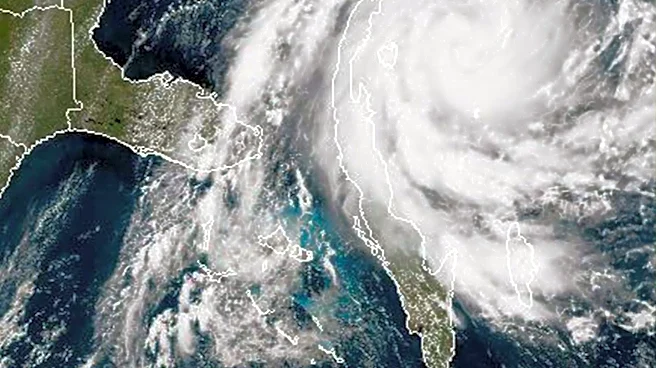
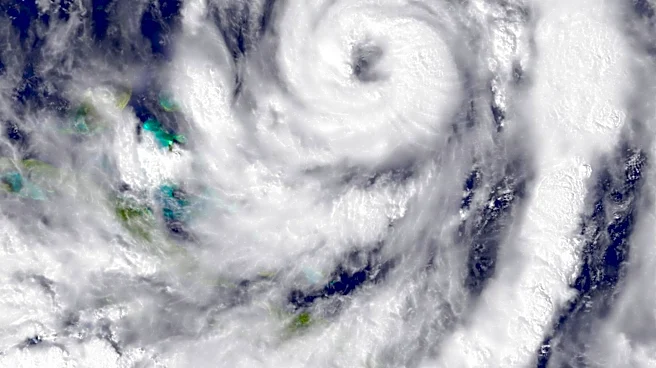
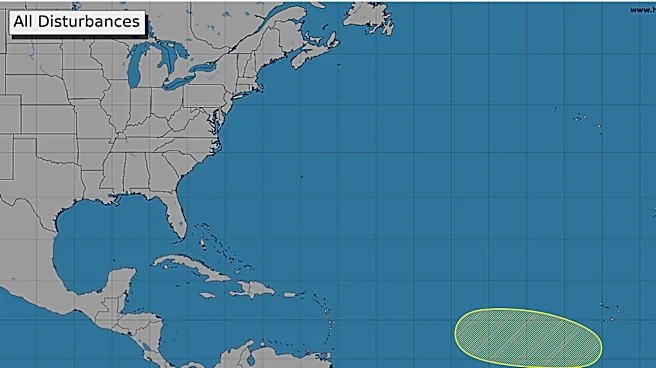
As the Atlantic hurricane season approaches its peak, two tropical waves have emerged from Africa, moving westward across the ocean. The first wave has a low chance of development due to strong wind shear in the Caribbean, while the second wave has a medium
chance of becoming a tropical depression. Sea surface temperatures are above average, which could influence storm development. However, strong wind shear and Saharan dust are likely to hinder the formation of significant storms. The National Hurricane Center is monitoring these systems, but they currently pose no immediate threat to the Caribbean or the United States.
Why It's Important?
Monitoring tropical waves is crucial for predicting potential hurricanes that could impact the U.S. and Caribbean regions. While the current waves face obstacles, the situation highlights the importance of preparedness during hurricane season. Elevated sea surface temperatures can fuel storm development, but factors like wind shear and Saharan dust play a critical role in determining storm intensity and trajectory. Understanding these dynamics helps meteorologists provide accurate forecasts and warnings, allowing communities to prepare for potential impacts. The ongoing monitoring of tropical waves is essential for mitigating risks associated with hurricanes.
What's Next?
The National Hurricane Center will continue to track the tropical waves as they move across the Atlantic. If conditions become more favorable, the waves could develop into tropical depressions or storms. Meteorologists will provide updates on their progress and potential impacts. Communities in the Caribbean and along the U.S. Gulf Coast should remain vigilant and prepared for any changes in storm activity. The situation underscores the need for ongoing research and investment in hurricane prediction and response strategies to protect lives and property.