


What's Happening?
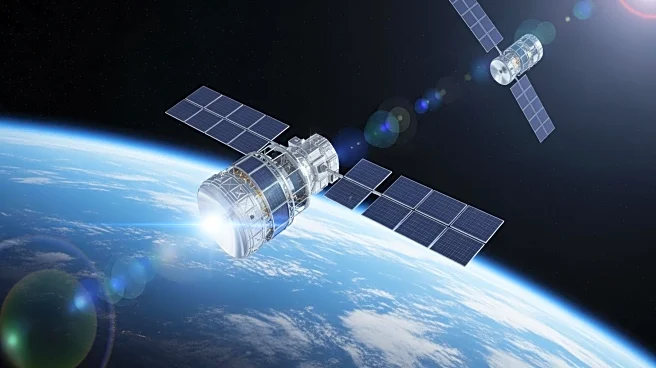
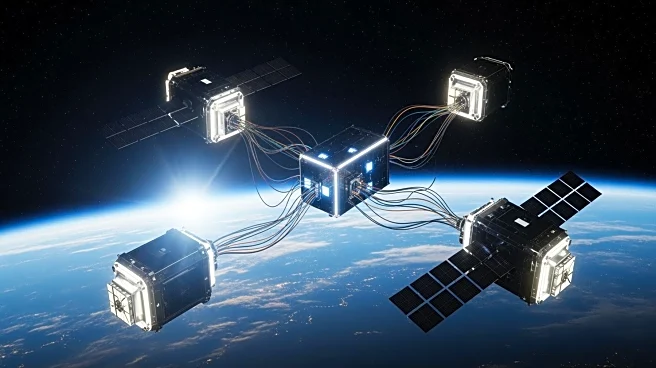
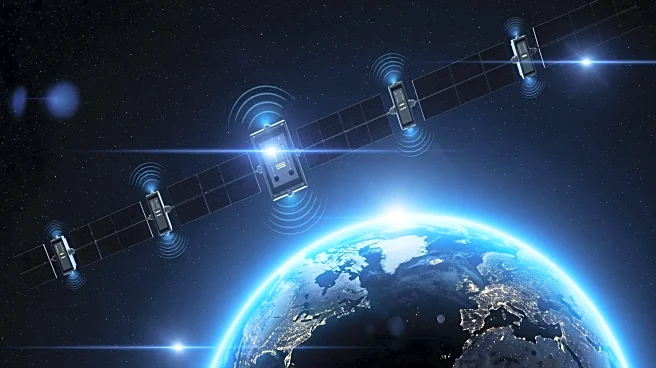
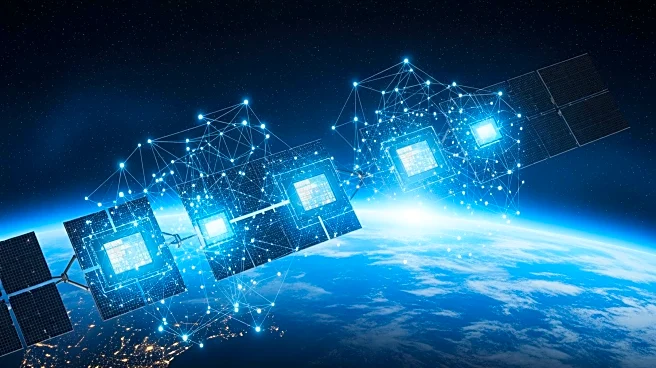
Chinese and American laboratories are in a competitive race to deploy supercomputers in space, aiming to power artificial intelligence systems from orbit. This technological endeavor involves major players such as Starlink, Blue Origin, Google, and the
startup Starcloud, all of which are enhancing their satellite and computer chip technologies to withstand the harsh conditions of space. The Institute of Computing Technology of the Chinese Academy of Sciences is leading efforts in China, while in the U.S., tech moguls like Elon Musk, Jeff Bezos, and Sundar Pichai are investing heavily in similar projects. Notably, Starcloud has already launched a satellite equipped with an Nvidia H100 graphics processing unit, marking a significant milestone by training the NanoGPT large language model in space.
Why It's Important?
The development of space-based AI infrastructure could significantly reduce the environmental impact of AI technologies on Earth, which currently consume vast amounts of energy and water. By utilizing solar power, these orbital data centers could operate with much lower electricity consumption. This shift not only promises environmental benefits but also positions the leading nation or company at the forefront of future computing technologies. The race to establish AI capabilities in space could redefine global technological leadership, with potential economic and strategic advantages for the first to succeed.
What's Next?
As the race intensifies, both nations are likely to accelerate their efforts to overcome the technical challenges of operating supercomputers in space. This includes addressing issues related to microgravity, extreme temperatures, and exposure to solar radiation. The successful deployment of these technologies could lead to operational supercomputers in space by the 2030s. The outcome of this race could influence global AI development strategies and international collaborations or rivalries in space technology.
Beyond the Headlines
The pursuit of space-based supercomputing raises questions about the ethical and regulatory frameworks needed to govern such technologies. The potential for AI systems to operate independently in space could lead to new discussions about data security, privacy, and the militarization of space. Additionally, the economic implications for industries reliant on traditional computing infrastructure could be profound, as space-based systems might offer more efficient and sustainable alternatives.