






What's Happening?
U.S. Representative Salud Carbajal (D-CA-24) and U.S. Senator Alex Padilla (D-CA) have introduced the Ocean Protection and DDT Reduction Act. This new legislation aims to tackle the issue of toxic industrial waste and pesticide pollution, specifically
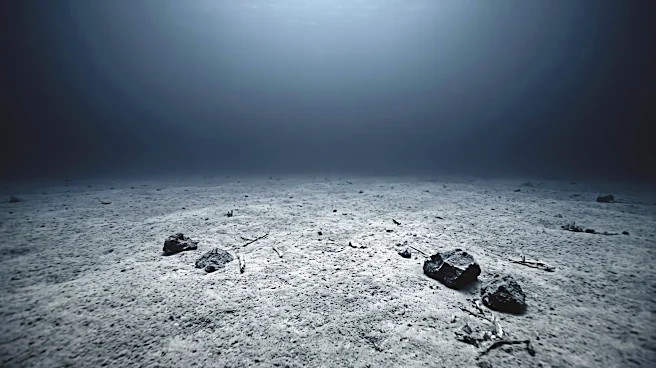
DDT, that has been dumped off the Southern California coast for decades, particularly in the San Pedro Basin. The bill proposes a structured federal study to assess the environmental damage to the local marine ecosystem and to develop comprehensive solutions for cleaning up the waste. Representative Carbajal highlighted the importance of protecting these waters for local communities and economies, including fishermen, maritime workers, and the tourism industry. The legislation directs the National Oceanic and Atmospheric Administration (NOAA) to monitor waste sites, study the spread of toxic chemicals into the ocean food web, and create scientific tools to track ocean dumping. It also authorizes $6 million annually from Fiscal Year 2026 through Fiscal Year 2032 to fund these activities, allowing NOAA to award grants to academic and research institutions for detailed studies on contamination mapping, co-contaminants, movement and breakdown processes, and bioaccumulation in ecosystems.
Why It's Important?
The introduction of the Ocean Protection and DDT Reduction Act is significant for several reasons. The long-term dumping of industrial waste, including DDT, poses substantial risks to marine life, fisheries, and public health in Southern California. DDT, a synthetic pesticide banned in the U.S. in 1972 due to its adverse environmental and health effects, continues to impact the ecosystem. This legislation represents a crucial step towards federal acknowledgment and coordinated action on an environmental issue that has lacked clear responsibility from federal agencies for decades. By establishing a federal study and providing dedicated funding, the bill aims to generate the scientific data necessary to understand the full scope of the contamination and to inform effective cleanup strategies. Protecting these waters is vital for the ecological health of the Pacific Ocean and for the economic well-being of coastal communities that rely on healthy marine environments for fishing, tourism, and other maritime activities. The bill's focus on scientific research and inter-agency coordination could set a precedent for addressing similar historical waste sites along other U.S. coastlines.
What's Next?
The Ocean Protection and DDT Reduction Act will now proceed through the legislative process in Congress. Its passage would enable NOAA, in coordination with the Environmental Protection Agency (EPA) and the Department of Defense, to initiate the mandated federal study and monitoring programs. This would involve detailed spatial mapping of contamination, analysis of co-contaminants and chemical mixtures, and research into the movement, fate, and breakdown processes of these toxic substances. Academic and research institutions would likely be invited to apply for grants to conduct these studies. The findings from this research will be critical in developing and implementing long-term solutions for waste cleanup, potentially including bioremediation. The bill's success will depend on bipartisan support and continued advocacy from environmental groups and affected communities. If enacted, the initial phase will focus on scientific assessment, with subsequent actions geared towards remediation based on the study's conclusions. The authorized annual funding of $6 million through Fiscal Year 2032 indicates a sustained commitment to addressing this environmental challenge over several years.
Beyond the Headlines
Beyond the immediate environmental cleanup, this legislation touches upon broader themes of historical environmental accountability and the long-term consequences of industrial practices. The dumping of DDT and other industrial waste highlights a period when environmental regulations were less stringent, and the ocean was often viewed as an unlimited disposal site. The bill's emphasis on understanding bioaccumulation and biomagnification in ecosystems underscores the complex and persistent nature of these pollutants, which can enter the food chain and potentially impact human health through seafood consumption. This initiative could also spur innovation in environmental remediation technologies, particularly in areas like bioremediation, which aims to use biological processes to neutralize contaminants. Furthermore, the collaborative approach involving federal agencies, academic institutions, and local communities could serve as a model for addressing other legacy pollution sites across the nation, fostering a more proactive and scientifically informed approach to environmental protection and restoration.