




What's Happening?
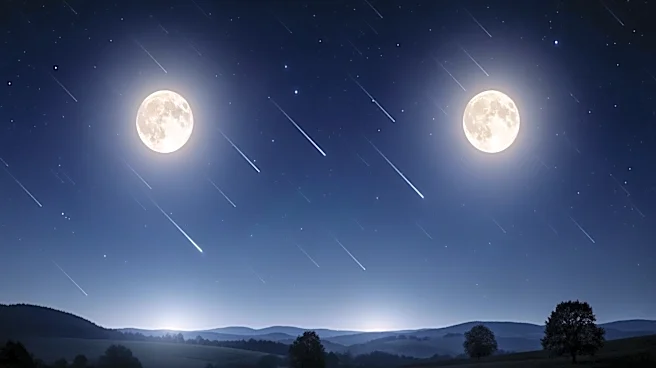
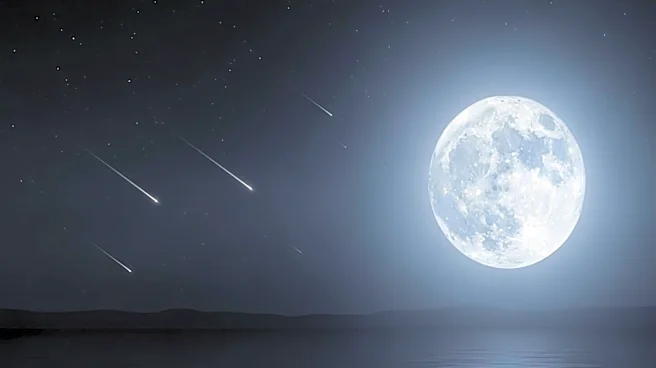
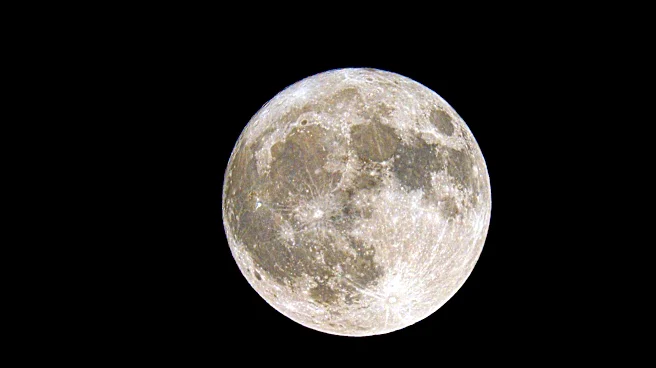
The Eta Aquarid meteor shower, which originates from debris left by Halley’s Comet, is set to peak soon. However, a bright moon is expected to reduce visibility, particularly in the Northern Hemisphere. Typically, the Southern Hemisphere can witness up
to 50 meteors per hour during the peak, but the moon's brightness may cut this number by half. In the Northern Hemisphere, observers might see fewer than 10 meteors per hour. The shower will be most visible in the early morning hours, and viewers are advised to find locations away from city lights and tall buildings to improve their chances of seeing the meteors.
Why It's Important?
Meteor showers like the Eta Aquarids offer a unique opportunity for public engagement with astronomy, allowing people to witness celestial events firsthand. The reduced visibility due to the moon's brightness highlights the challenges of observing astronomical phenomena and the importance of optimal viewing conditions. This event underscores the need for public awareness about light pollution and its impact on astronomical observations. Additionally, the Eta Aquarids serve as a reminder of Halley’s Comet, a significant astronomical object that passes Earth approximately every 76 years, with its next appearance expected in 2061.
What's Next?
Skywatchers are encouraged to prepare for the meteor shower by finding dark, unobstructed viewing locations and allowing their eyes to adjust to the darkness. Despite the moon's interference, the event remains a valuable opportunity for amateur astronomers and the general public to engage with the night sky. Future meteor showers will continue to provide similar opportunities, and advancements in technology may offer new ways to enhance viewing experiences. The ongoing study of meteor showers contributes to our understanding of cometary debris and its interactions with Earth's atmosphere.