






What's Happening?
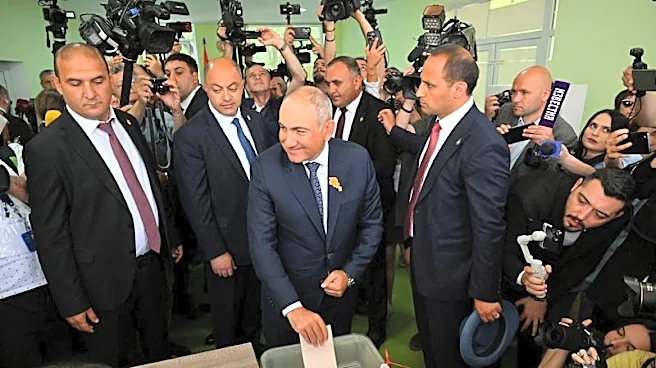
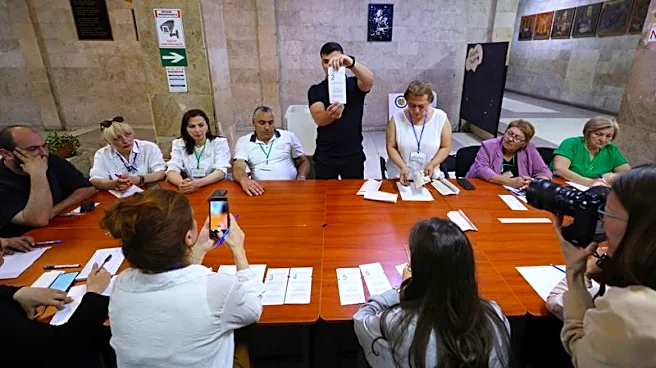
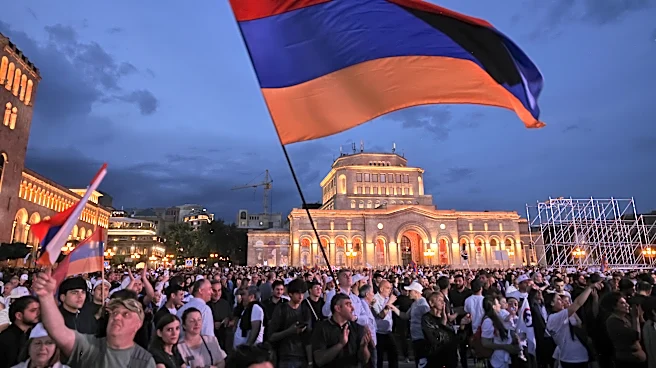
Armenia's recent parliamentary election has been closely watched as it could signify a shift in the country's geopolitical alignment. Prime Minister Nikol Pashinyan's Civil Contract party is favored to win, advocating for closer ties with Europe and distancing
from Russia. The election follows Armenia's loss of Nagorno-Karabakh to Azerbaijan, a significant event that has influenced public sentiment. Pashinyan's main opponent, Samvel Karapetyan, a pro-Russian figure, has been campaigning under house arrest. The election is seen as a referendum on Armenia's future direction, with implications for its relations with both Russia and the European Union.
Why It's Important?
The election is pivotal for Armenia's geopolitical strategy, potentially altering its traditional alliance with Russia. A victory for Pashinyan could lead to stronger ties with Europe, impacting regional dynamics in the South Caucasus. This shift could also influence Armenia's economic policies and its approach to longstanding conflicts with neighboring countries. The election outcome is significant for international stakeholders, including the EU and the US, who have interests in Armenia's stability and alignment. The results could also affect Russia's influence in the region, as Armenia has been a key ally.
What's Next?
Following the election, Armenia's political landscape may undergo significant changes, particularly if Pashinyan secures a strong mandate. This could lead to renewed efforts for peace agreements with Azerbaijan and Turkey, as well as deeper integration with European institutions. The international community will be watching closely to see how Armenia navigates its foreign policy and economic strategies post-election. Potential reactions from Russia, which has expressed concerns over Armenia's European orientation, will also be critical in shaping future developments.
Beyond the Headlines
The election underscores broader themes of national identity and sovereignty, as Armenia grapples with its historical ties to Russia and aspirations for European integration. The political climate reflects a tension between maintaining traditional alliances and pursuing new opportunities for growth and stability. The election also highlights the challenges of democratic governance in a region often dominated by authoritarian regimes, with Armenia standing out as a democratic outlier.