
What's Happening?
San Diego city planners have unveiled a new 30-year development blueprint for the 8,000-acre Mid-City area, encompassing neighborhoods like City Heights, Normal Heights, Kensington, Talmadge, and Rolando.
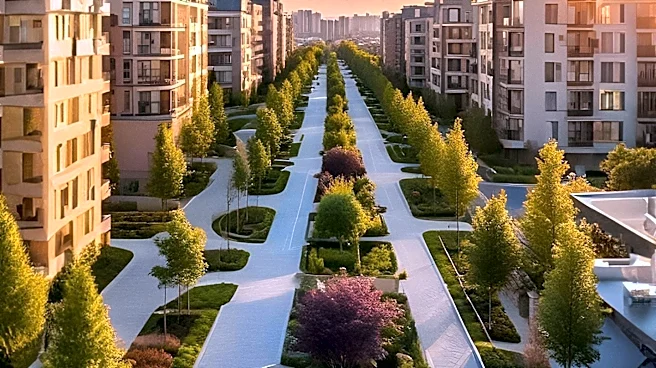
The proposal aims to nearly double the number of homes from 54,000 to 96,000 and increase the population from 138,000 to 227,000. This plan envisions high-rise and mid-rise housing along major thoroughfares such as El Cajon Boulevard, Fairmount Avenue, Federal Boulevard, and University Avenue. It also allows for a wider range of housing types, including townhomes and cottages, in single-family home areas not near major streets. While city officials, including Mayor Todd Gloria, emphasize the need for more affordable housing, community leaders from the affected neighborhoods are criticizing the plan. Their concerns include insufficient provisions for additional park space, expanded libraries, and other amenities to support the increased population. They also argue that combining diverse neighborhoods under a single development blueprint is inappropriate and that the city has largely ignored their input over the past two years.
Why It's Important?
This proposed development blueprint is highly significant for San Diego's urban planning and housing strategy. It represents a substantial effort to address the city's housing shortage and affordability crisis by dramatically increasing density in a sprawling area. The plan's emphasis on transit-oriented development, with new transit villages near rapid bus lines and future trolley stops, aligns with broader urban sustainability goals to reduce reliance on private vehicles. However, the strong opposition from neighborhood leaders highlights a common tension between city-wide development goals and local community preservation. The concerns about inadequate infrastructure, such as parks and libraries, underscore the importance of holistic planning that integrates housing growth with essential public services. The debate also touches on the preservation of neighborhood character, particularly in historic areas like Kensington and Talmadge, where residents fear the loss of their unique ambience due to high-rise developments. This conflict between growth and preservation is a critical issue facing many rapidly developing U.S. cities.
What's Next?
The city plans to release a revised version of the Mid-City Communities Plan Update later this year, incorporating feedback received during the public review period. Residents and community leaders are encouraged to continue providing their input to help shape the final plan. The proposal will then proceed through the city's approval process, which will likely involve further public hearings and discussions with the City Council. Neighborhood leaders, such as David Moty of the Kensington-Talmadge Community Planning Group and Paul Coogan of the Normal Heights Planning Group, are expected to continue advocating for their communities' interests, particularly regarding the provision of amenities and the protection of historic areas. The implementation of state law SB 79, which mandates dense housing near rapid bus lines, will also play a role in the final decisions, though community leaders are exploring options to relocate such dense housing. The ultimate outcome will determine the future landscape and demographic makeup of a significant portion of San Diego.
Beyond the Headlines
The San Diego Mid-City development plan delves into deeper societal and urban planning implications. The historical context of redlining in Mid-City, which led to a lack of amenities in predominantly non-White areas, adds a layer of social justice to the current debate. Community leaders' calls for equitable distribution of resources and amenities are not just about current needs but also about rectifying past inequalities. The plan's attempt to combine diverse communities, each with unique cultural makeups and socio-economic conditions, raises questions about the effectiveness of a one-size-fits-all approach to urban development. The tension between increasing housing density for affordability and preserving neighborhood character and historical resources is a recurring theme in urban development across the U.S. This situation highlights the complex interplay of economic pressures, state mandates, local governance, and community activism in shaping the future of American cities.