



What's Happening?
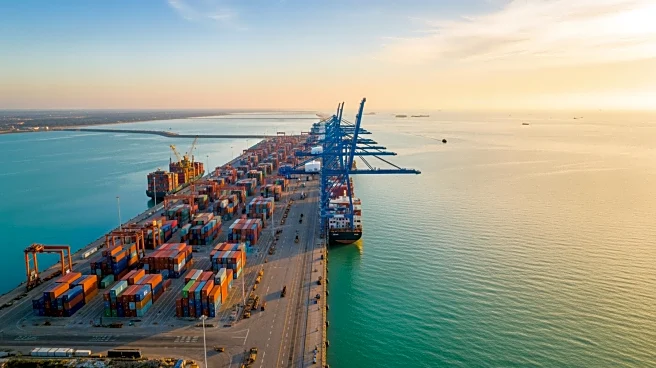
Kuwait has signed a contract with a Chinese state-owned company to begin the first phase of constructing the Mubarak Al-Kabeer Port on Bubiyan Island. This project is part of Kuwait's Vision 2035 strategic development plan and aligns with China's Belt
& Road Initiative. The contract focuses on preparatory engineering, procurement, and construction, rather than a Build, Operate, Transfer model, leaving the future operator of the port uncertain. The port's location is strategically significant, near major trade hubs in Iraq and Iran, but political and logistical challenges remain.
Why It's Important?
The development of the Mubarak Al-Kabeer Port is crucial for Kuwait's economic diversification and regional trade ambitions. By enhancing its port infrastructure, Kuwait aims to capture a larger share of regional trade, potentially boosting its economy. The involvement of a Chinese company underscores China's expanding influence in the Middle East through infrastructure projects. This partnership could strengthen economic ties between Kuwait and China, while also positioning Kuwait as a key player in the Gulf's logistics and trade sectors. However, the project's success depends on overcoming political hurdles and competition from established regional ports.
What's Next?
The next steps involve completing the preparatory construction phase and determining the port's operational management. Kuwait will need to address political and logistical challenges to ensure the port's integration into regional trade networks. The project may face delays due to Kuwait's parliamentary oversight and capital expenditure processes. As the port develops, Kuwait will likely seek partnerships with international logistics companies to enhance its operational capabilities. The project's progress will be closely watched by regional competitors and could influence future infrastructure investments in the Gulf.