






What's Happening?
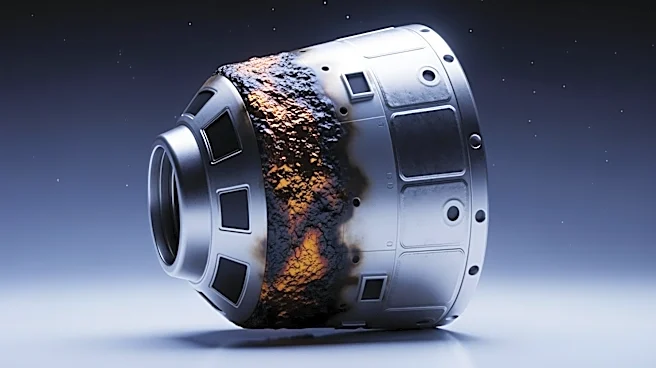
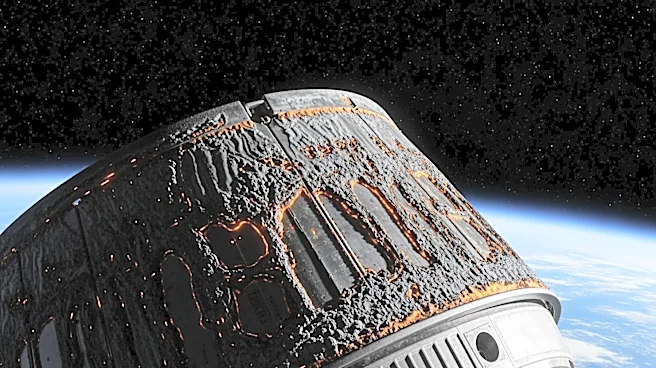
NASA's Artemis 2 mission marked the first human journey to the moon in over 50 years, with the Orion spacecraft returning to Earth after a 10-day mission. The capsule, named 'Integrity' by its crew, was visibly charred from its re-entry through Earth's
atmosphere, a testament to the extreme conditions it endured. The mission, which launched on April 1, 2026, included a crew of four astronauts who traveled around the moon before splashing down in the Pacific Ocean on April 10. The return trip subjected the capsule to temperatures as high as 5,000 degrees Fahrenheit, highlighting the challenges of space travel and re-entry.
Why It's Important?
The successful completion of the Artemis 2 mission is a significant milestone in human space exploration, demonstrating NASA's capability to send astronauts to the moon and bring them back safely. The mission's success paves the way for future lunar exploration, including the establishment of a sustainable human presence on the moon. The charred state of the Orion capsule underscores the importance of developing robust heat shields and re-entry technologies to protect astronauts during their return to Earth. This mission also serves as a precursor to more ambitious plans under NASA's Artemis program, which aims to explore the moon's south pole and beyond.