


What's Happening?
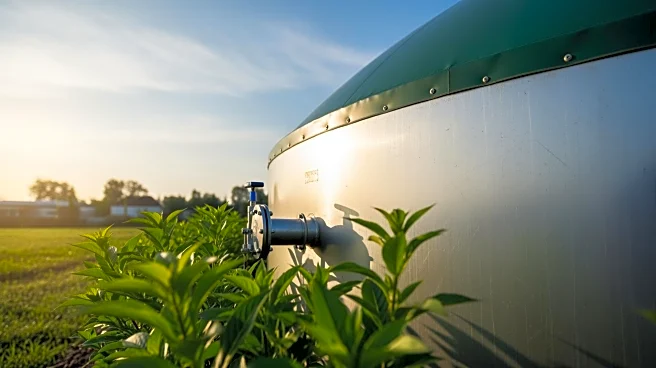
The Shrimati Manekba Vinay Vihar Educational Complex in Gandhinagar, Gujarat, has achieved self-reliance in cooking gas by utilizing biogas produced on-site. Managed by the Vasumati Charitable Trust, the institution operates two biogas plants with a combined
capacity of 90 cubic meters per day. These plants use cow dung from the trust's cowshed, which houses 222 cows, along with organic waste from the kitchen and surrounding fields. This initiative is part of the Gujarat government's 'Institutional Biogas Plant Scheme,' which provides subsidies to institutions for installing biogas plants. Over the past five years, 193 such plants have been established across Gujarat, with plans for 60 more in the financial year 2026-27. The biogas produced is an inexpensive and environmentally friendly cooking fuel, and the resulting slurry is used as an organic fertilizer, supporting sustainable agriculture.
Why It's Important?
This development is significant as it highlights a successful model of energy self-reliance and environmental sustainability. By reducing reliance on LPG cylinders, the institution not only cuts costs but also minimizes its carbon footprint. The use of biogas and organic fertilizers supports sustainable agriculture practices, which are crucial in mitigating the environmental impact of traditional farming methods. This initiative aligns with Gujarat's focus on alternative energy and sustainable development under Chief Minister Bhupendra Patel. It serves as a model for other institutions and regions aiming to reduce environmental pollution and promote the scientific utilization of biological waste.
What's Next?
The Gujarat Energy Development Agency (GEDA) plans to expand the biogas initiative by establishing 60 more plants in the financial year 2026-27, with a budget provision of Rs 12 crore. This expansion will further enhance energy self-reliance and environmental sustainability across the state. As more institutions adopt biogas technology, there could be a significant reduction in the use of fossil fuels and chemical fertilizers, leading to broader environmental benefits. The success of this initiative may encourage other states and countries to implement similar schemes, contributing to global efforts in reducing greenhouse gas emissions and promoting renewable energy sources.
Beyond the Headlines
The initiative also has cultural and educational implications. By integrating biogas technology into educational institutions, students are exposed to practical applications of sustainable practices, fostering a culture of environmental responsibility. This hands-on experience can inspire future generations to prioritize sustainability in their personal and professional lives. Additionally, the project supports local economies by creating jobs in the installation and maintenance of biogas plants, as well as in organic farming. The initiative demonstrates how traditional practices, such as using cow dung, can be modernized to meet contemporary environmental challenges.