





What's Happening?
The California Department of Forestry and Fire Protection (CAL FIRE) is actively recruiting Forestry Fire Pilots for multiple full-time, permanent positions in Santa Clara County, California. These pilots will be based at the Alma Helitack Base in Los
Gatos, CA. CAL FIRE, which serves as California's fire department and resource management agency, is comprised of nearly 14,000 permanent and seasonal employees. The department's mission is to safeguard the people and protect the property and resources of California. The job requires incumbents to possess a valid Federal Aviation Agency (FAA) Commercial Airman Certificate with a rotorcraft-helicopter rating or an FAA Airline Transport Pilot’s Certificate with the same rating, along with a valid Class II Airman’s Medical Certificate. Applicants must also have logged at least 2,000 hours of pilot-in-command time flying helicopters, with specific flight hours in qualifying conditions as detailed in the class specifications. CAL FIRE pilots are expected to work any required shift and remain on duty 24 hours a day, adhering to regulated maximum flight times and mandated uninterrupted sleep cycles.
Why It's Important?
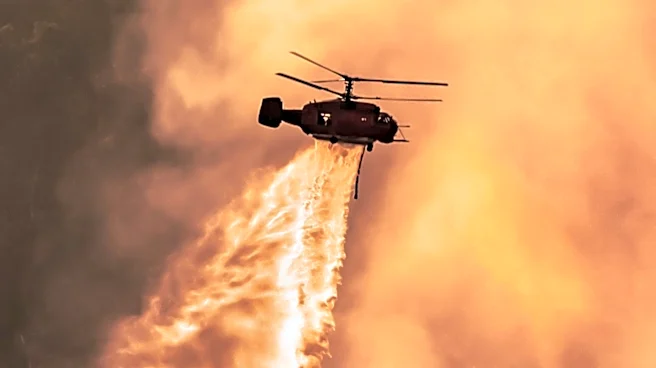
The recruitment of Forestry Fire Pilots is crucial for enhancing California's aerial firefighting capabilities, particularly in regions prone to wildfires like Santa Clara County. These pilots play a vital role in wildfire suppression efforts, providing critical support for ground crews by conducting water drops, reconnaissance, and personnel transport. The demand for skilled fire pilots underscores the increasing challenges posed by wildfires in California, which have grown in frequency and intensity due to various factors, including climate change. Filling these positions ensures that CAL FIRE can effectively respond to emergencies, protect communities, and manage natural resources. The rigorous requirements for flight hours and certifications highlight the specialized expertise needed for this high-stakes role, emphasizing the importance of experienced professionals in mitigating the devastating impact of wildfires on both human lives and the environment. The continuous operation requirement also reflects the demanding nature of wildfire response, where rapid deployment and sustained effort are essential.
What's Next?
Prospective candidates must submit a complete application package, including an electronic copy of their pilot logbook, by the final filing date of September 9, 2026. Applications can be submitted electronically through a CalCareer Account or via hard copy to CAL FIRE Northern Region Hiring in Santa Rosa, CA. The application process involves screening, and only the most qualified applicants will proceed to the selection process. Candidates must meet the minimum qualifications outlined in the classification specifications and may need to pass an examination to obtain list eligibility. Those who successfully complete the examination will be placed on an eligibility list, though this does not guarantee employment. The evaluation during the hiring process will be based on predetermined criteria assessing knowledge, specialized skills, and abilities relevant to the program's needs. Applicants requiring reasonable accommodations for the hiring interview process should request them at the time of contact to schedule the interview.
Beyond the Headlines
The ongoing need for specialized roles like Forestry Fire Pilots reflects a broader societal adaptation to the escalating threat of wildfires in California. This recruitment effort is not merely about filling job vacancies but is indicative of the state's long-term strategy to bolster its emergency response infrastructure. The emphasis on extensive flight experience and specific certifications highlights the inherent risks and complexities involved in aerial firefighting, which demands a high level of precision, courage, and technical skill. Furthermore, the 24-hour duty requirement and strict flight regulations underscore the physical and mental toll on these professionals, bringing to light the human element in the fight against natural disasters. The continuous investment in such specialized personnel and equipment is a testament to the evolving nature of disaster management, where advanced technology and highly trained individuals are indispensable in protecting vulnerable communities and ecosystems from the increasing impacts of climate-related events.