
What's Happening?
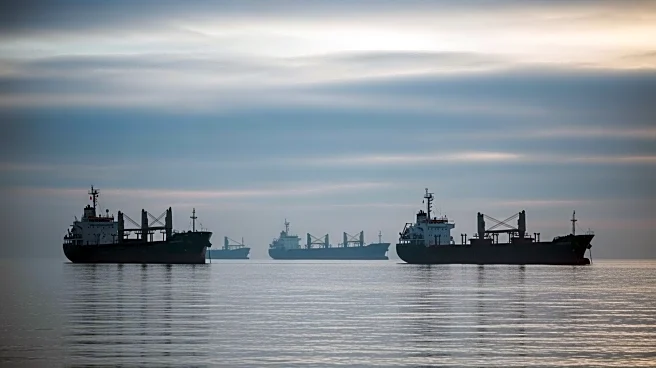
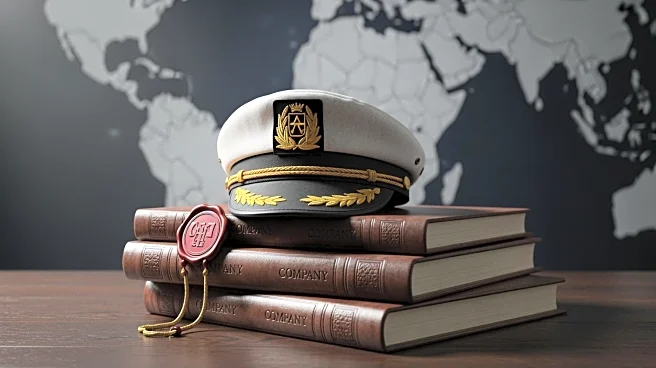
President Volodymyr Zelenskyy of Ukraine has signed decrees imposing sanctions on 225 captains of vessels transporting Russian oil products, circumventing restrictions by the EU and G7. The sanctions also target 44 Russian companies involved in the military-industrial
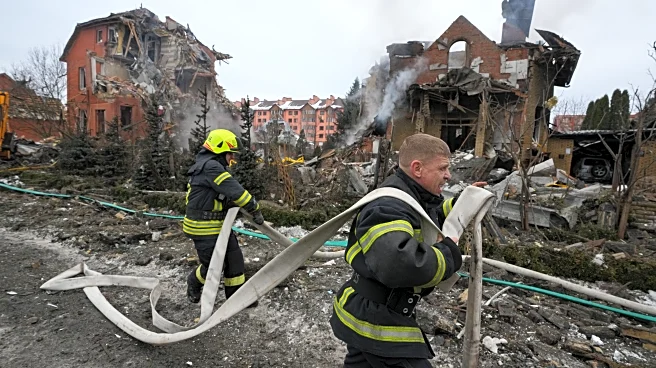
complex. These measures aim to eliminate incentives for cooperation with Russian oil, which finances the war. The sanctions list includes individuals from 11 countries and companies supplying equipment for military use. Ukraine plans to share information with international partners to coordinate sanctions policy and expand restrictions against entities supporting Russian aggression.
Why It's Important?
The sanctions reflect Ukraine's ongoing efforts to weaken Russia's economic and military capabilities amid the conflict. By targeting the shadow fleet and military-related companies, Ukraine aims to disrupt Russia's supply chains and financial resources. The move could influence international trade dynamics, as countries reassess their involvement with Russian oil and military industries. The sanctions also highlight the geopolitical tensions in the region, affecting global energy markets and diplomatic relations. Ukraine's actions may encourage other nations to adopt similar measures, increasing pressure on Russia.
What's Next?
Ukraine will continue monitoring maritime traffic and collaborating with international partners to enforce sanctions. The effectiveness of these measures will depend on global cooperation and compliance. As Ukraine expands its sanctions list, affected companies and individuals may seek legal recourse or adjust their operations to mitigate impacts. The international community's response, including potential retaliatory actions by Russia, will shape future developments. Ukraine's strategy may evolve, focusing on broader economic and diplomatic efforts to counter Russian aggression.