






What's Happening?
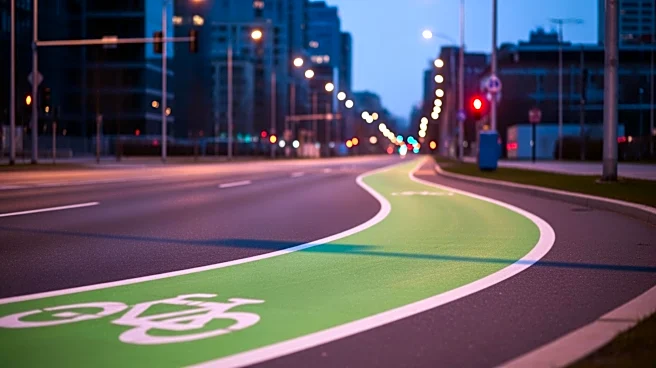
In Chicago, the construction of bike lanes on Archer Avenue in Brighton Park has ignited a political debate, with weekly protests and counter-protests since December. The project, part of the city's Complete Streets program, aims to enhance safety for
cyclists, pedestrians, and transit riders by adding features like concrete bump outs and bus-boarding islands. Proponents argue these changes improve safety and reduce traffic fatalities, citing a 35% drop in traffic deaths since 2019. However, opponents claim the project harms local businesses by reducing parking and is a step towards gentrification. The controversy has also spread to Grand Avenue, where similar safety upgrades have been met with mixed reactions. The debate highlights a broader citywide divide over transportation priorities and urban planning.
Why It's Important?
The bike lane construction in Chicago is significant as it reflects a broader shift in urban planning towards prioritizing pedestrian and cyclist safety over car-centric infrastructure. This shift has implications for local businesses, residents, and the city's overall transportation policy. Proponents argue that safer streets can lead to increased commercial activity and reduced traffic injuries, while opponents fear economic harm and loss of parking. The controversy underscores the challenges cities face in balancing the needs of different transportation users and the political tensions that can arise from such changes. The outcome of this debate could influence future urban planning decisions in Chicago and other cities grappling with similar issues.
What's Next?
As the bike lane projects continue, further adjustments and community engagement are expected. The Chicago Department of Transportation has made some changes, such as restoring parking spots and removing certain barriers, in response to feedback. However, opponents remain vocal, with some planning to run for political office to challenge the current leadership. The ongoing protests and political campaigns suggest that the debate over bike lanes and urban planning will persist, potentially influencing future elections and policy decisions. The city may need to find a compromise that addresses safety concerns while mitigating economic impacts on local businesses.