






What's Happening?
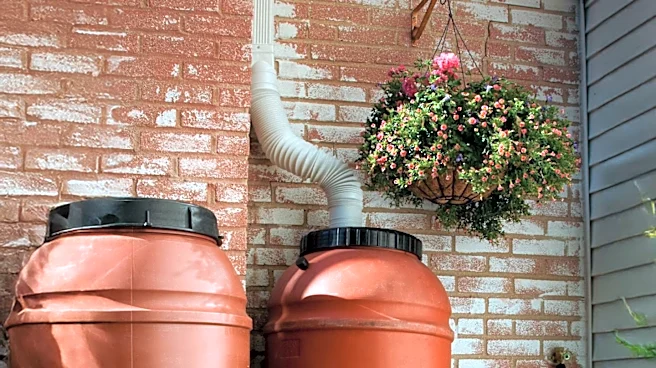
While the concept of rainwater energy generators is not explicitly detailed in the provided information, the data highlights the practical application of rainwater collection systems for water storage. For instance, a property in Heathmont, Australia,
features a 5,000-liter underground rainwater tank, which is integrated into an energy-efficient home design that also includes solar panels and a hardwired generator connection. Similarly, a property in Dalby boasts over 45,000 gallons of rainwater storage capacity. These systems are primarily employed for water conservation and supply, such as connecting to toilets, rather than for generating electricity. The focus is on utilizing collected rainwater for various domestic or agricultural needs, thereby reducing reliance on other water sources. The information also touches upon atmospheric water generators as a method to produce water from air, but these are distinct from rainwater collection for energy generation.
Why It's Important?
The widespread use of rainwater collection systems underscores a growing emphasis on water conservation and self-sufficiency, particularly in regions facing water scarcity or high utility costs. For homeowners, these systems can significantly reduce water bills and provide a reliable backup water supply for non-potable uses like irrigation or toilet flushing. This trend is important for environmental sustainability, as it lessens the demand on municipal water supplies and can help manage stormwater runoff. While not directly related to energy generation from rainwater, the integration of rainwater tanks with other energy-efficient technologies, such as solar panels, indicates a holistic approach to sustainable living. The economic benefits for property owners include long-term savings on water consumption and increased resilience against water supply disruptions. The adoption of such systems reflects a broader societal shift towards resource management and environmental responsibility.
What's Next?
The continued integration of rainwater collection systems into residential and commercial properties is expected, driven by increasing awareness of water conservation and the potential for cost savings. Advancements in filtration and purification technologies could further expand the uses of collected rainwater, potentially making it suitable for potable applications in the future. There may also be increased policy support and incentives from local governments to encourage the installation of these systems, especially in drought-prone areas. Furthermore, as climate patterns become more unpredictable, the demand for reliable, independent water sources is likely to grow, making rainwater harvesting an even more attractive option. Research and development might also explore more efficient ways to combine water collection with other sustainable technologies, creating integrated home utility systems.
Beyond the Headlines
The emphasis on rainwater collection systems, even without direct energy generation, points to a broader societal movement towards resilience and self-reliance. In an era of increasing environmental concerns and infrastructure vulnerabilities, individuals and communities are seeking ways to reduce their dependence on centralized utilities. Rainwater harvesting, alongside other sustainable practices like solar power adoption, represents a tangible step towards creating more sustainable and independent living environments. This shift also highlights a growing appreciation for natural resources and a desire to minimize ecological footprints. The ethical implications revolve around responsible resource management and ensuring equitable access to clean water, especially as global water resources become more strained. Culturally, it signifies a return to more traditional, localized methods of resource management, updated with modern technology.