



What's Happening?
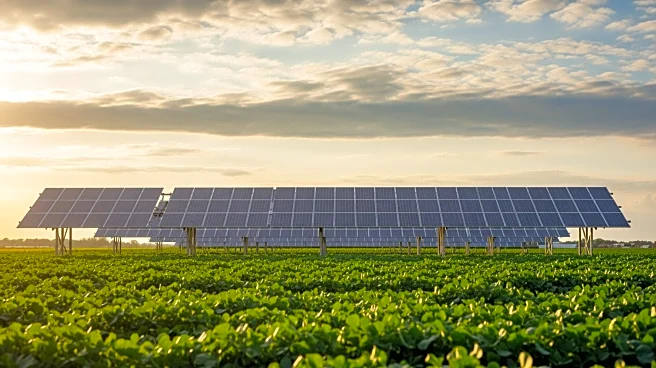
New Jersey has initiated the Dual-Use Solar Energy Pilot Program, aimed at integrating solar panels on farmland to create a new revenue stream for farmers. Approved by the New Jersey Board of Public Utilities, this program seeks to combine agriculture
with solar energy, known as agrivoltaics, to enhance land use efficiency and promote clean energy. The program will begin accepting applications in the new year, with data collected to inform a more permanent initiative. Governor Phil Murphy emphasized the program's role in achieving clean energy goals while supporting local farmers. New Jersey has significantly increased its solar capacity, with nearly a quarter of a million homes and businesses now equipped with solar installations.
Why It's Important?
The Dual-Use Solar Energy Pilot Program represents a significant step towards sustainable agriculture and energy production. By allowing farmers to generate additional income through solar energy, the program supports economic growth in rural areas while contributing to New Jersey's clean energy targets. This initiative could serve as a model for other states looking to balance agricultural productivity with renewable energy development. The program's success could lead to broader adoption of agrivoltaics, reducing reliance on fossil fuels and decreasing agricultural pollution.
What's Next?
As the program begins, stakeholders will monitor its impact on both agricultural productivity and energy generation. The data collected will be crucial in shaping a long-term strategy for integrating solar energy into farming practices. If successful, the program could expand, influencing policy decisions and encouraging similar initiatives nationwide. Farmers, energy companies, and policymakers will likely collaborate to optimize the benefits of agrivoltaics, potentially leading to legislative support and additional funding for renewable energy projects.