





What's Happening?
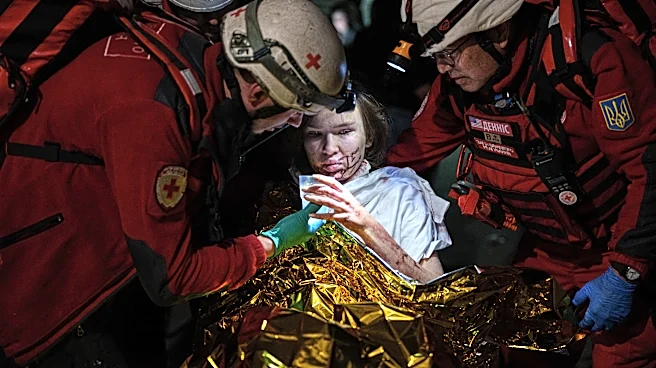
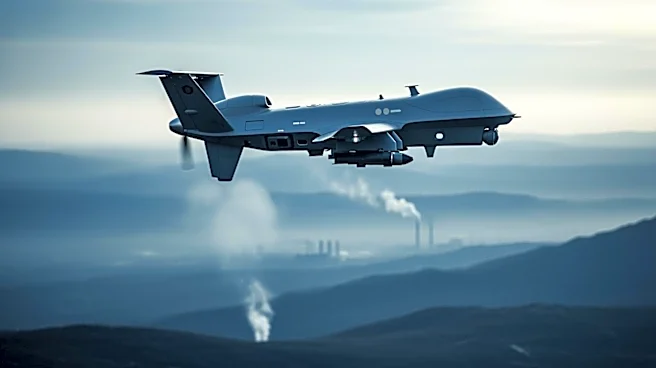
A large-scale Russian attack on Kyiv and other Ukrainian cities has resulted in at least 18 deaths and over 100 injuries. The assault, one of the largest in the ongoing conflict, involved 73 missiles and 656 drones. Ukrainian air defenses managed to intercept
a significant portion of the incoming threats, but numerous sites were still hit. In Kyiv, residential buildings were severely damaged, and power outages affected thousands. The attack is part of a broader strategy by Russia to target Ukraine's defense capabilities, though civilian areas have been heavily impacted. Ukrainian President Volodymyr Zelensky has called for increased Western support, particularly in air defense systems.
Why It's Important?
The attack highlights the persistent threat to civilian safety and infrastructure in Ukraine, exacerbating the humanitarian crisis. It also underscores the strategic challenges faced by Ukraine in defending against advanced military technology. The international community, especially NATO and the U.S., may face increased pressure to provide military and humanitarian aid to Ukraine. The conflict's escalation could lead to broader geopolitical tensions, particularly if Russia's actions provoke a stronger response from NATO countries. The situation raises concerns about regional stability and the potential for further international involvement.
What's Next?
Ukraine is expected to continue its diplomatic efforts to secure more advanced defense systems from Western allies. The international community may respond with additional sanctions against Russia or increased military support for Ukraine. The conflict's trajectory remains uncertain, with potential implications for global security and economic stability. Monitoring the situation closely will be crucial for international stakeholders to assess the need for further intervention or support.