

What's Happening?
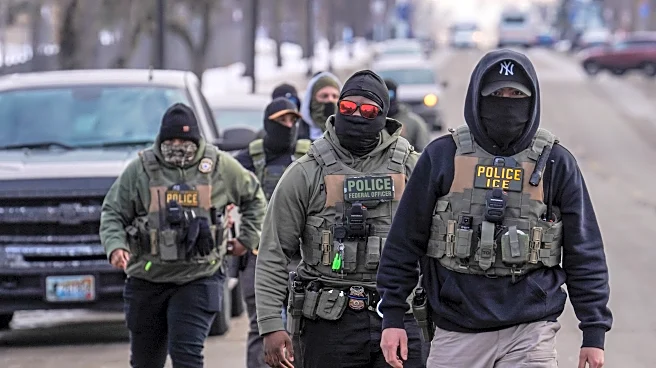
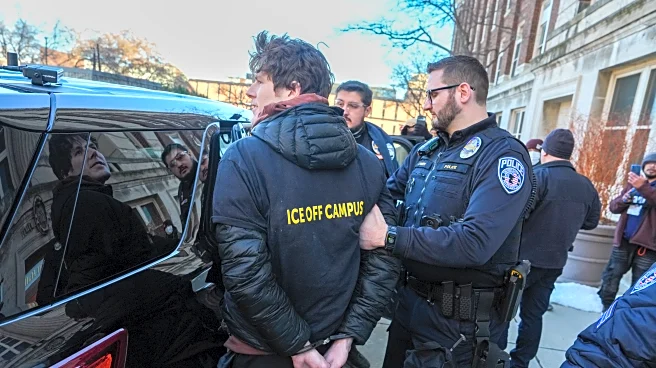
On Martin Luther King Jr. Day, a significant anti-ICE march took place in Philadelphia's Center City. The demonstration was organized in response to recent ICE raids and the death of Renee Good in Minneapolis. Participants gathered to express their opposition
to the actions of the Immigration and Customs Enforcement agency, highlighting concerns over immigration policies and enforcement practices. The march was part of a broader movement advocating for immigrant rights and justice, aligning with the civil rights themes of the day. The event drew a large crowd, reflecting widespread community support for the cause.
Why It's Important?
The march in Philadelphia underscores ongoing national debates over immigration policy and enforcement in the United States. By choosing Martin Luther King Jr. Day for the protest, organizers linked the current struggle for immigrant rights to the broader civil rights movement, emphasizing themes of equality and justice. The event highlights the persistent tensions between federal immigration authorities and local communities, particularly in cities with large immigrant populations. This demonstration is part of a larger pattern of public dissent against ICE operations, which many activists argue disproportionately affect minority communities and violate human rights.
What's Next?
Following the march, organizers and participants are likely to continue advocating for changes in immigration policy at both local and national levels. This could involve lobbying for legislative reforms, increasing public awareness, and building coalitions with other civil rights organizations. The response from ICE and federal authorities to such demonstrations will be closely watched, as will any potential policy shifts from the current administration. The ongoing dialogue between immigrant communities, activists, and government officials will play a crucial role in shaping future immigration policies.