







What's Happening?
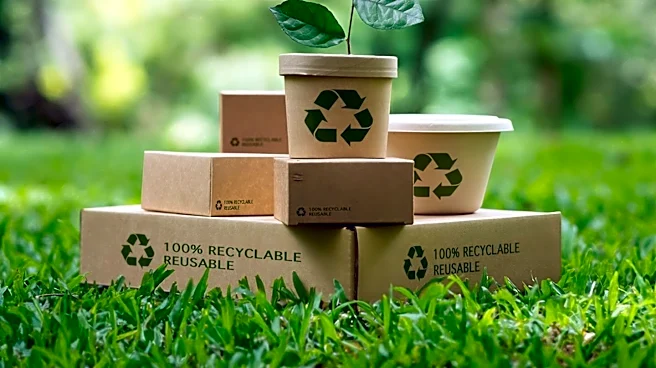
The selection of building materials is increasingly influenced by sustainability considerations, with a focus on minimizing environmental impact throughout a product's lifecycle. There is no single 'most sustainable' material; instead, choices depend
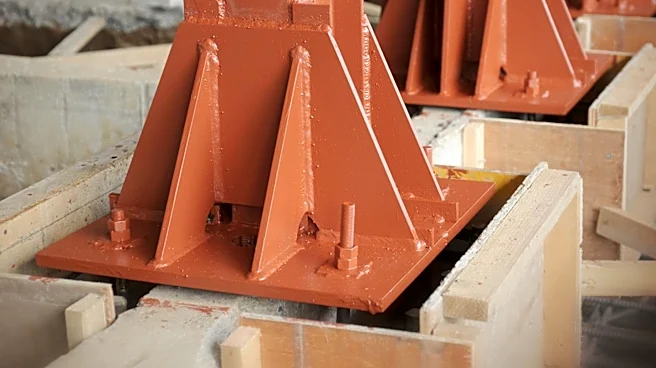
on specific applications, transport, durability, maintenance, replacement, and end-of-life factors. Lower-processing options like responsibly sourced timber, earth, straw, hemp, and reclaimed products are gaining traction. Concrete, a widely used material, faces scrutiny due to cement production's significant CO2 emissions, with efforts underway to reduce its carbon footprint through blended cements and supplementary cementitious materials. The industry is also distinguishing between material combustibility and fire resistance ratings, emphasizing that a material's inherent properties do not always equate to an assembly's performance in a fire.
Why It's Important?
This evolving understanding of sustainable building materials has profound implications for the U.S. construction industry, urban planning, and environmental policy. The emphasis on lifecycle assessment encourages a holistic view of environmental impact, moving beyond initial material costs to consider long-term ecological and economic consequences. For instance, reducing the carbon footprint of concrete, a staple in U.S. infrastructure, can significantly contribute to national climate goals. The shift towards materials like responsibly sourced timber supports sustainable forestry and local economies. Furthermore, the distinction between combustibility and fire resistance is critical for ensuring public safety and informing building codes, potentially leading to safer and more resilient structures while promoting innovative material combinations that meet both performance and sustainability criteria.
What's Next?
The trend towards sustainable building materials will likely drive further innovation in material science, focusing on developing products with lower embodied carbon, enhanced durability, and improved end-of-life recyclability. This will necessitate greater collaboration between material manufacturers, architects, engineers, and policymakers to integrate these advancements into standard building practices and regulations. Expect to see more stringent building codes that mandate the use of sustainable materials and require comprehensive lifecycle assessments. The demand for transparency in material sourcing and environmental impact data will also increase, pushing manufacturers to provide detailed Environmental Product Declarations (EPDs). This could lead to a more circular economy within the construction sector, where materials are reused and recycled more effectively, reducing waste and resource consumption.
Beyond the Headlines
The discourse around sustainable building materials extends beyond mere technical specifications to touch upon ethical and cultural dimensions. It challenges the traditional linear model of 'take, make, dispose' in construction, advocating for a more regenerative approach that considers the ecological footprint of every component. This shift can foster a deeper connection between human-made environments and natural ecosystems, promoting designs that are not only functional but also harmonious with their surroundings. The long-term implications include a potential redefinition of architectural aesthetics, where the inherent qualities and sustainable attributes of materials become central to design philosophy, leading to buildings that are healthier for occupants and the planet.