


What's Happening?
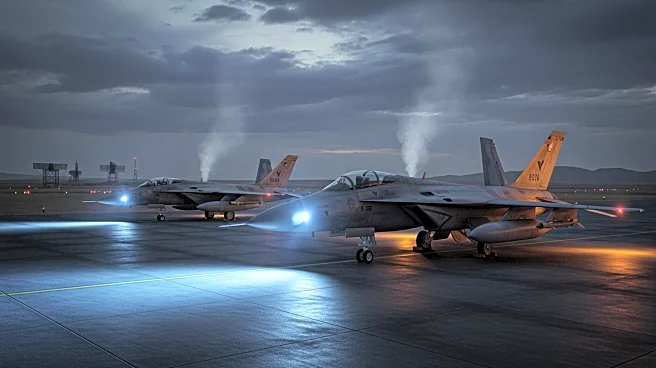
A recent Iranian strike on the Prince Sultan Air Base in Saudi Arabia has resulted in significant damage to U.S. military assets, including an E-3 Sentry surveillance aircraft and two KC-135 refueling tankers. The attack, which involved six ballistic
missiles and 29 drones, also wounded 15 American soldiers, five of whom sustained serious injuries. Images circulating on social media, though not officially confirmed by U.S. authorities, show the radar dome of the E-3 Sentry collapsed on the ground, indicating severe damage. The E-3 Sentry, a critical component of U.S. military operations, serves as an airborne warning and control system, providing real-time battlefield coordination and tracking of missiles, drones, and aircraft over long distances. The Wall Street Journal reported that the precision of the strike suggests advanced targeting capabilities, potentially involving satellite intelligence. The U.S. Air Force's fleet of E-3 aircraft is limited, making replacements challenging.
Why It's Important?
The damage to the E-3 Sentry and refueling aircraft underscores the vulnerability of U.S. military assets in the region and highlights the escalating tensions between the U.S. and Iran. The loss of such critical equipment could impact U.S. military operations and strategic capabilities in the Middle East. The financial implications are also significant, with estimates of damage and replacement costs ranging from $1.4 billion to $2.9 billion. This incident may prompt a reassessment of U.S. military strategy and asset protection in the region, potentially influencing future military engagements and diplomatic relations with Iran. The involvement of advanced targeting technology raises concerns about the sophistication of Iranian military capabilities and the potential for further escalations.
What's Next?
In response to the attack, the U.S. military may increase security measures and reassess its strategic positioning in the Middle East. Diplomatic efforts could be intensified to address the growing tensions with Iran, potentially involving international allies. The U.S. may also explore technological advancements to enhance the protection of its military assets. Additionally, the incident could lead to discussions within the U.S. government regarding military funding and resource allocation to ensure the readiness and resilience of its forces in volatile regions.