






What's Happening?
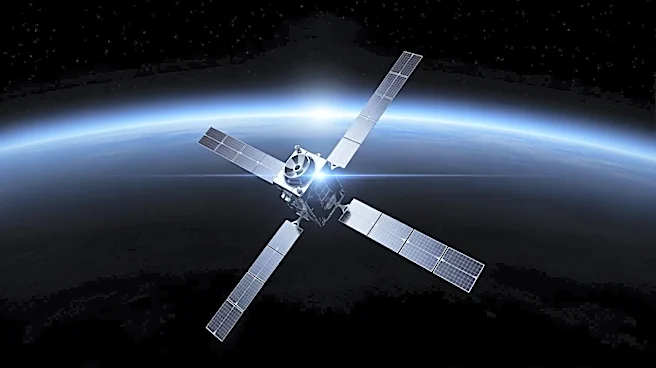
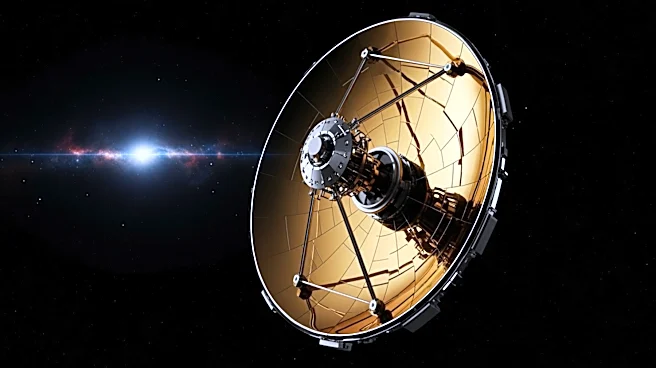
NASA is set to launch the Nancy Grace Roman Space Telescope on August 30, eight months earlier than initially planned. The telescope, named after former NASA chief of astronomy Nancy Grace Roman, is currently being prepared at NASA's Goddard Space Flight
Center in Maryland before its transfer to the Kennedy Space Center in Florida. Once there, it will undergo a series of tests and rehearsals, including the loading of nearly 300 gallons of hydrazine fuel. The telescope will be attached to a SpaceX Falcon Heavy Rocket, which will transport it to the second Sun-Earth Lagrange point, a location four times farther from Earth than the Moon. The Roman Space Telescope is equipped with a 300.8-megapixel camera capable of surveying a field of view 100 times larger than the Hubble Space Telescope. Its mission, lasting five years, will involve surveying billions of stars and galaxies, and examining thousands of exoplanets and hundreds of black holes.
Why It's Important?
The early launch of the Nancy Grace Roman Space Telescope represents a significant advancement in astronomical research capabilities. With its advanced imaging technology, the telescope will provide unprecedented insights into the universe, potentially answering fundamental questions about the formation of stars, galaxies, and planetary systems. The mission's success could enhance our understanding of the cosmos and our place within it. Additionally, the collaboration with SpaceX for the launch highlights the growing role of private companies in space exploration, which could lead to more cost-effective and efficient missions in the future. The telescope's findings could have profound implications for scientific research and education, inspiring future generations of astronomers and scientists.
What's Next?
Following its launch, the Nancy Grace Roman Space Telescope will embark on its five-year mission to explore the universe. Scientists and astronomers worldwide will eagerly await the data it collects, which could lead to groundbreaking discoveries in the field of astronomy. The telescope's success may also influence future space missions and the development of new technologies for space exploration. As the mission progresses, NASA and its partners will continue to monitor and analyze the telescope's performance and findings, potentially leading to extended missions or new projects based on its discoveries.