







What's Happening?
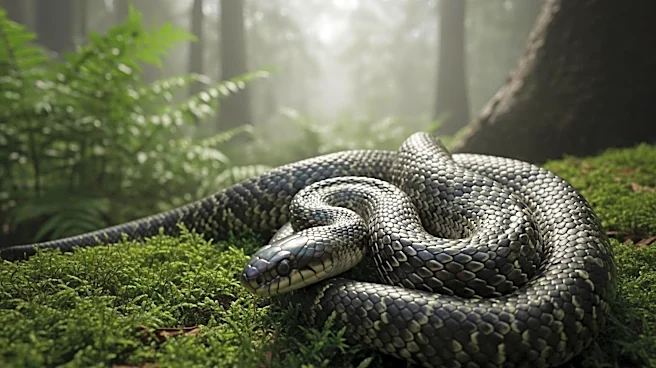
A new species of snake, named Trimeresurus lii, has been identified in the Sichuan Province of China after being misidentified for over 40 years. Researchers from the Chengdu Institute of Biology and the Giant Panda National Park discovered that this
vivid green pitviper, previously thought to be the bamboo pitviper, is a distinct species. DNA sequencing revealed that the Sichuan population forms a separate branch from the known species, T. stejnegeri. This discovery was published in the journal Zoosystematics and Evolution. The snake, which inhabits the humid forests around Mt. Emei and Xiling Snow Mountain, was previously misidentified due to its similar appearance to the bamboo pitviper. The new species is now the second member of its subgenus recorded in Sichuan and the 58th in the genus Trimeresurus.
Why It's Important?
The identification of Trimeresurus lii has significant implications for biodiversity and public health. The discovery highlights the cryptic diversity within the region's reptile communities, suggesting that other species may also be misidentified. Accurate identification is crucial for clinical reasons, as the snake's hemotoxic venom can cause severe health issues, and treatment protocols may differ from those used for other species. The discovery also emphasizes the need for habitat protection within the Giant Panda National Park, as each new species strengthens the case for conservation efforts. This finding underscores the importance of genetic research in uncovering hidden biodiversity and informs management decisions regarding land use and tourism in the area.
What's Next?
The discovery of Trimeresurus lii opens new avenues for research and conservation in the region. Scientists will likely conduct further genetic studies to explore the extent of cryptic diversity among other species in the area. The Giant Panda National Park's ongoing biodiversity inventory will continue to reshape scientific understanding of the region's ecosystems. Conservationists may advocate for increased protection measures to preserve the unique habitats that support such diverse wildlife. Additionally, public health officials may need to update treatment protocols for snakebites in the region to account for the newly identified species.
Beyond the Headlines
The discovery of Trimeresurus lii highlights the challenges of identifying species in biodiverse regions with limited access. The fact that a 32-inch snake went unrecognized for decades suggests that many other species may remain undocumented. This underscores the importance of sustained fieldwork and genetic research in uncovering the full extent of biodiversity. The finding also raises questions about the adequacy of current sampling methods and the potential for museum collections to hold other misidentified specimens. As researchers continue to explore the region, they may uncover additional species that have been overlooked, further enriching our understanding of global biodiversity.