





What's Happening?
The leader of Myanmar's military-backed government, President Min Aung Hlaing, has extended an invitation to the country's armed resistance groups for new peace talks. This marks the first such initiative since he assumed office earlier this month. The call
for dialogue is part of a 100-day program aimed at achieving peace and stability, as well as development. The military's seizure of power in 2021 intensified armed resistance, with pro-democracy activists joining ethnic armed groups in a civil war. Despite previous peace talks, little progress has been made. The new talks are scheduled to take place by July 31, with both signatories and non-signatories of past ceasefire agreements invited to participate.
Why It's Important?
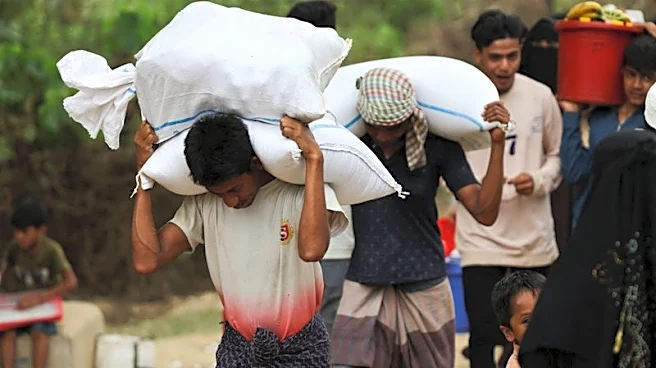
The proposed peace talks are significant as they represent a potential shift in Myanmar's ongoing conflict, which has seen increased violence since the military coup in 2021. The outcome of these talks could impact the stability of the region and the lives of millions affected by the conflict. Successful negotiations might lead to a reduction in violence and pave the way for political solutions that address the demands for autonomy by ethnic groups. However, skepticism remains high among opposition groups, who view the military's overtures as attempts to prolong their control.
What's Next?
The next steps involve the organization and execution of the proposed peace talks by the end of July. Key stakeholders, including ethnic armed groups and the National Unity Government, will need to decide whether to participate. The international community, particularly neighboring countries and global organizations, may play a role in facilitating or mediating these discussions. The success of these talks could influence future political dynamics in Myanmar and the region.